
Our Services
Non-Medical Home Care
The industry gives this a dozen names: personal care, companion care, home health aide, homemaker services, private duty, custodial care. From inside a household they are largely the same thing, in that somebody comes for a certain number of hours and helps. What you are actually choosing is not a service name. It is a schedule. Focus Family Care provides non-medical home care across seven South Florida and Treasure Coast counties.
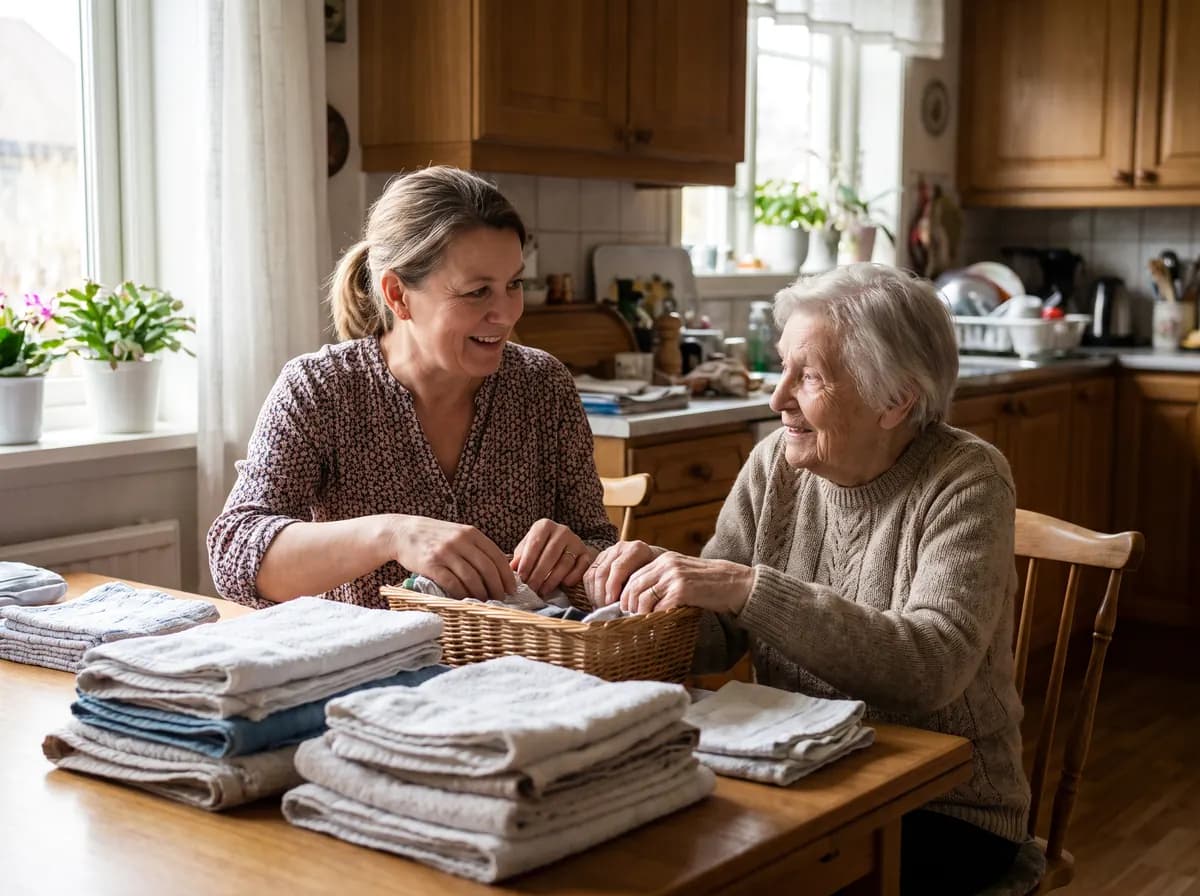
Non-Medical Home Care Services
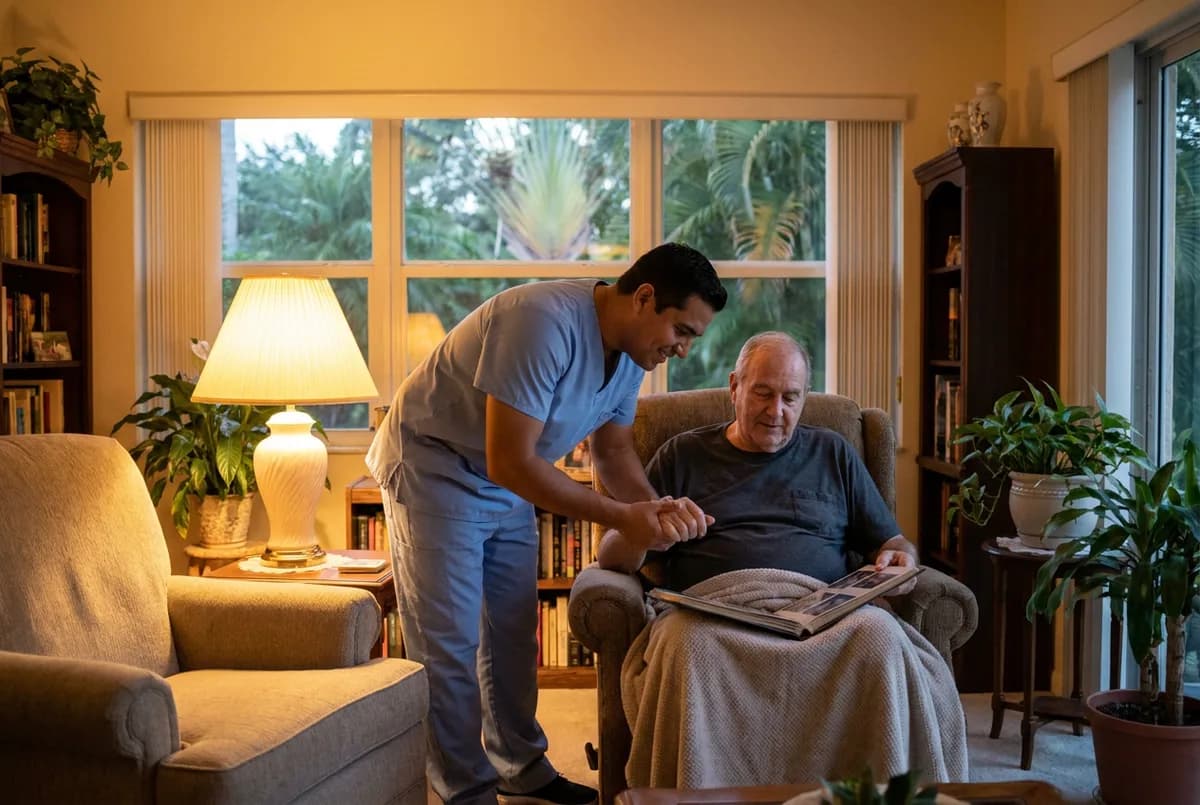
24-Hour Home Care
Awake caregivers in rotating shifts, every hour of the day and night.
Learn more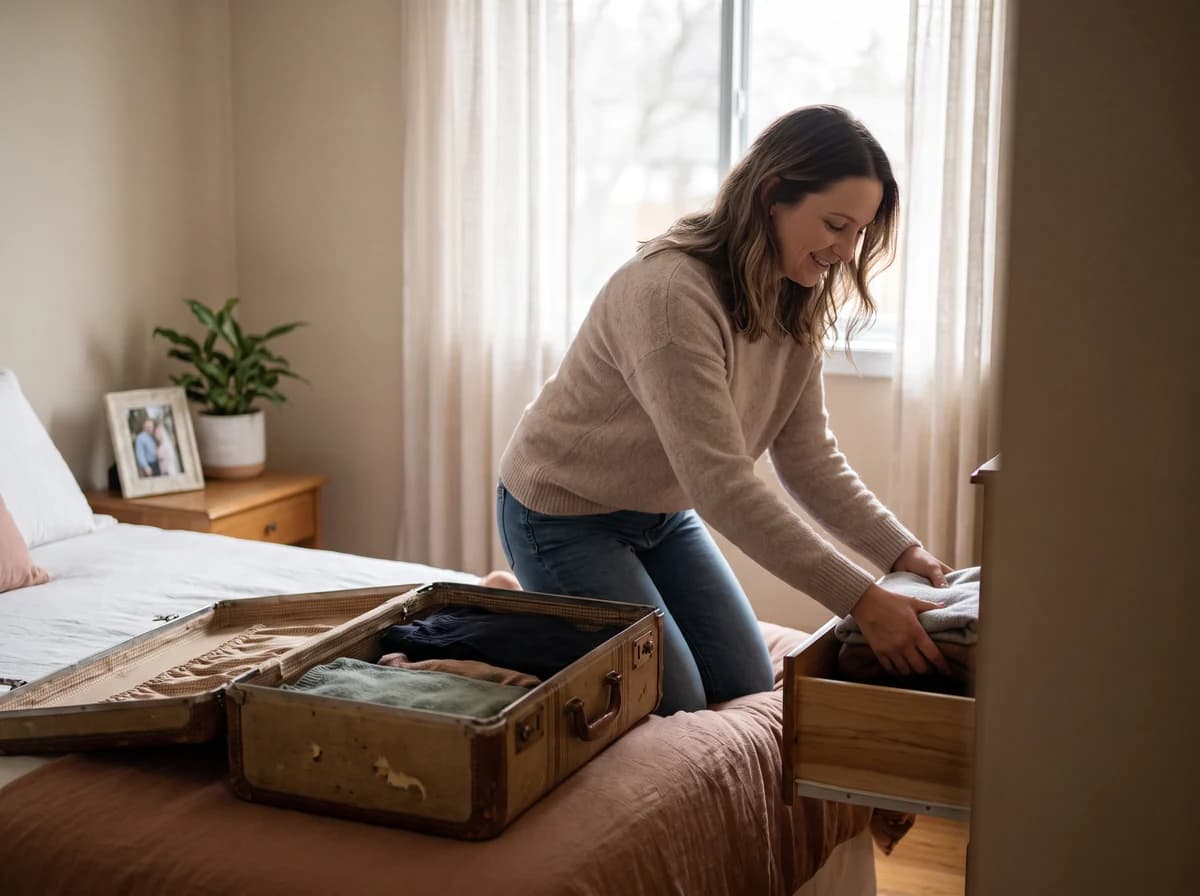
Live-In Care
One dedicated caregiver living in the home, an alternative to assisted living.
Learn more
Companion Care Services
Conversation, activities, meals, and errands that ease isolation.
Learn more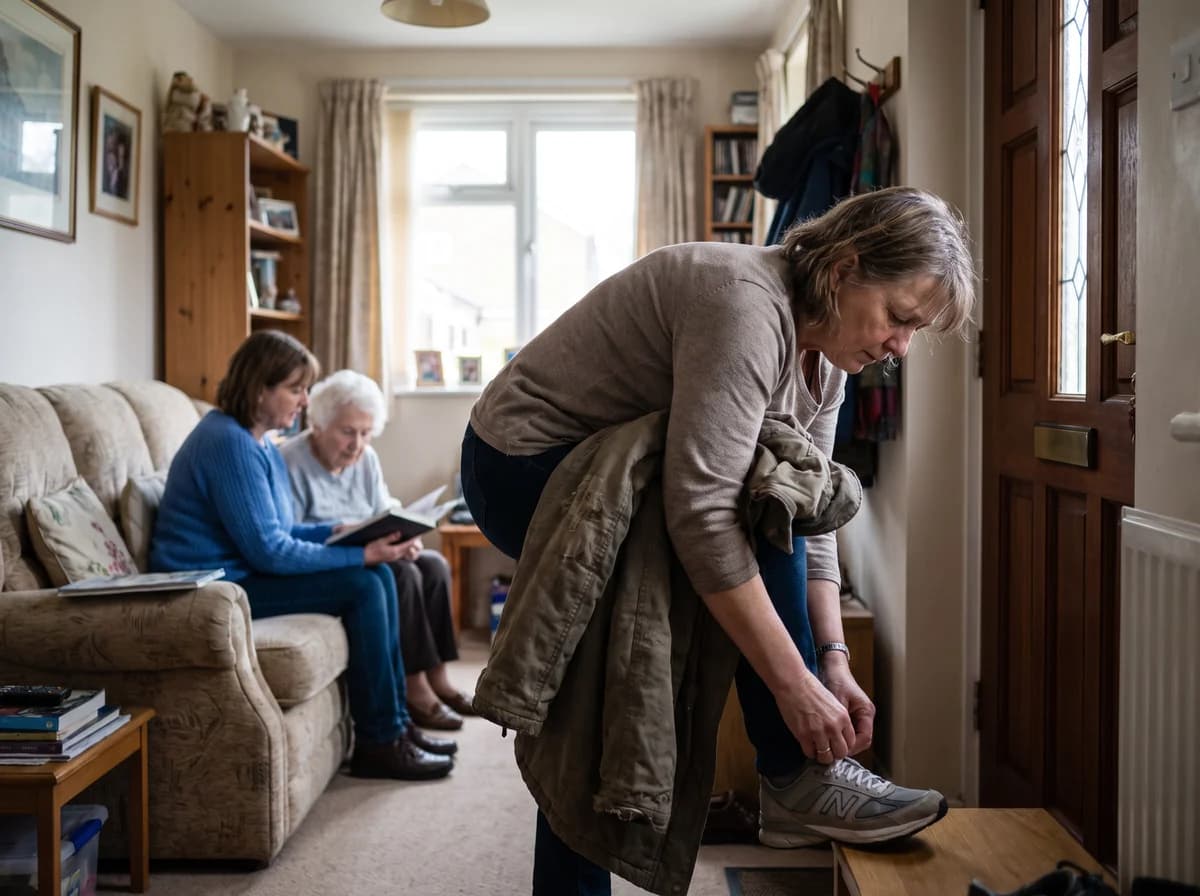
Respite Care
Short-term relief so family caregivers can rest and recharge.
Learn more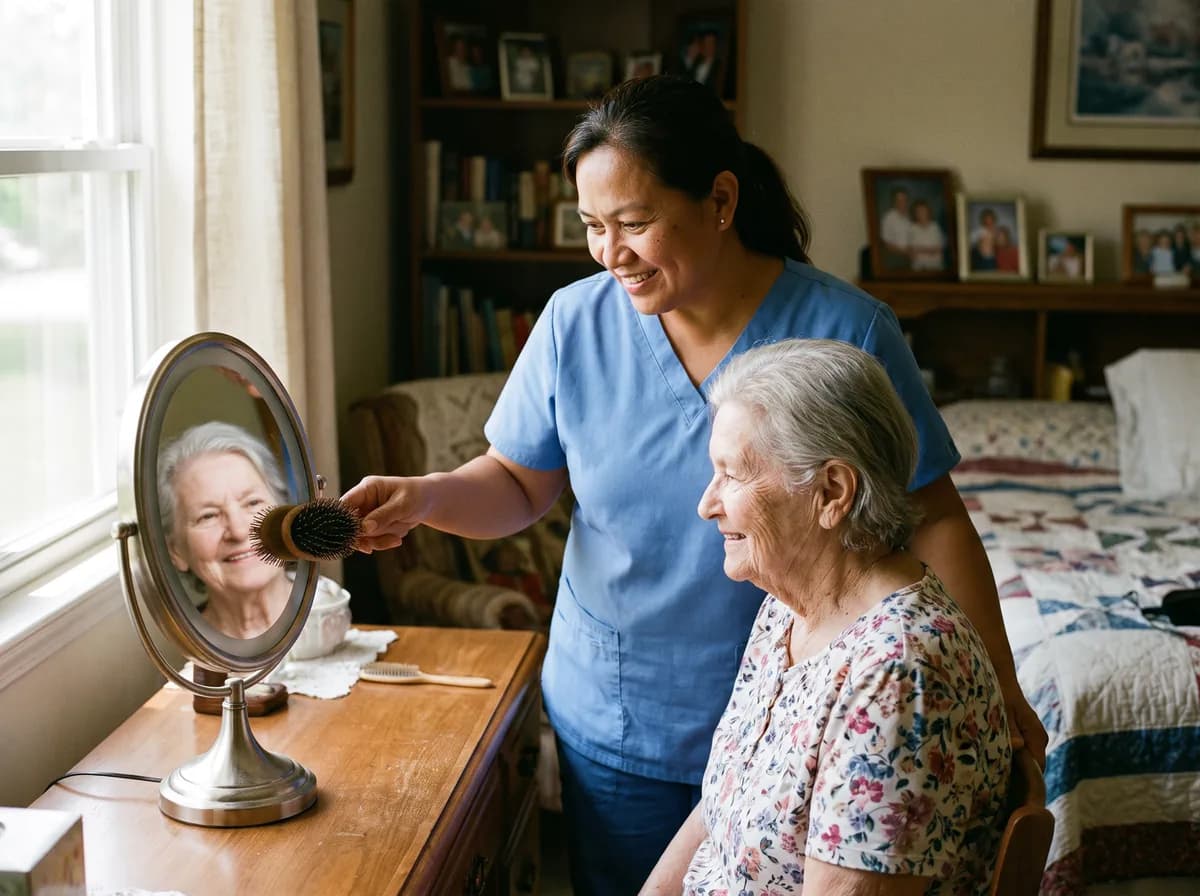
Personal Care Services at Home
Hands-on help with bathing, dressing, grooming, and mobility.
Learn more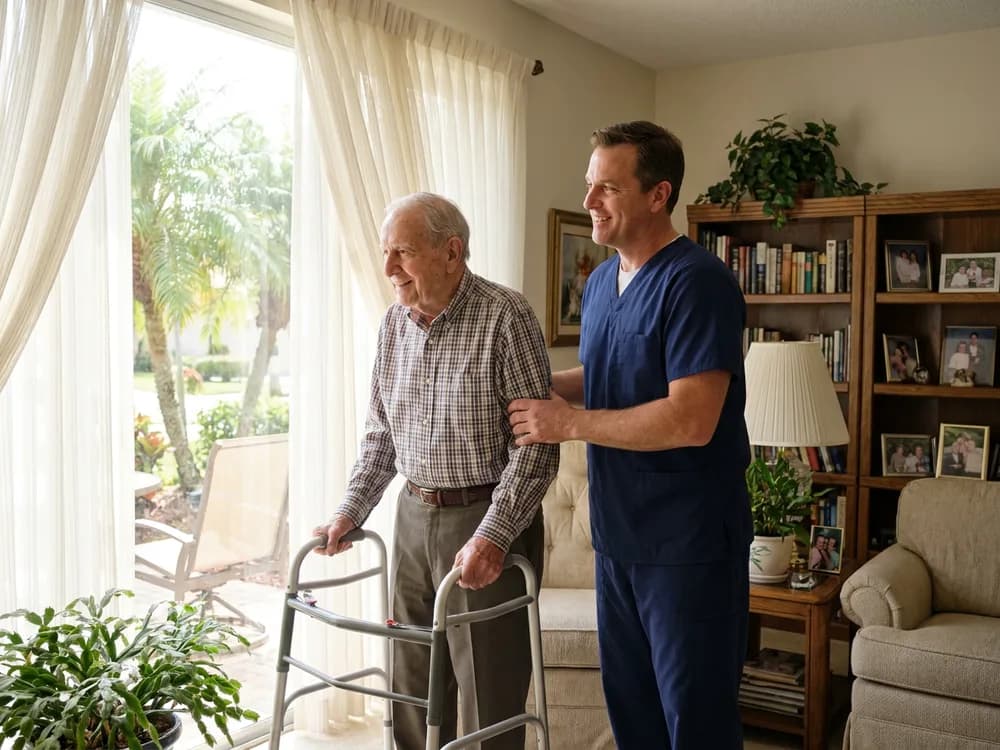
Home Health Aides
Certified, background-checked aides supervised by a registered nurse.
Learn more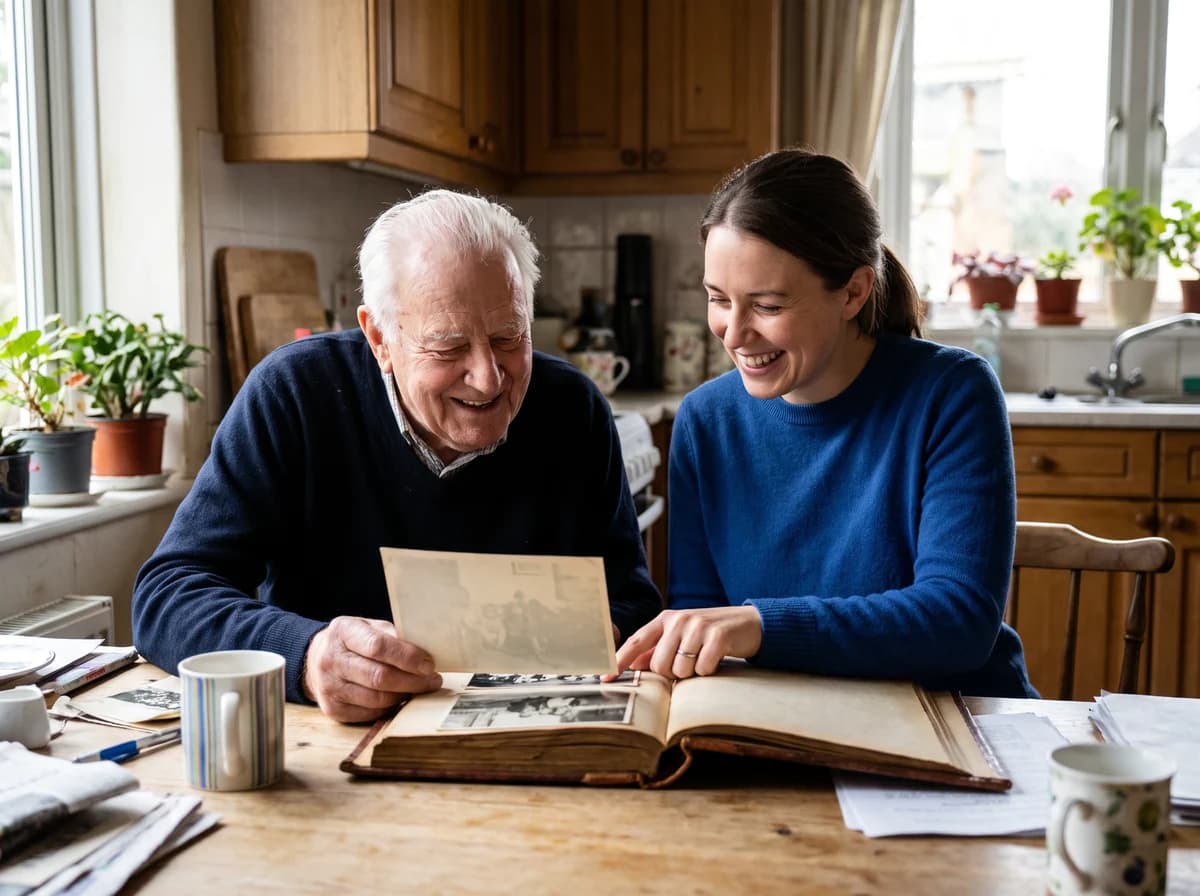
Alzheimer's & Dementia Care
Structured, patient memory care that keeps clients safe at home.
Learn more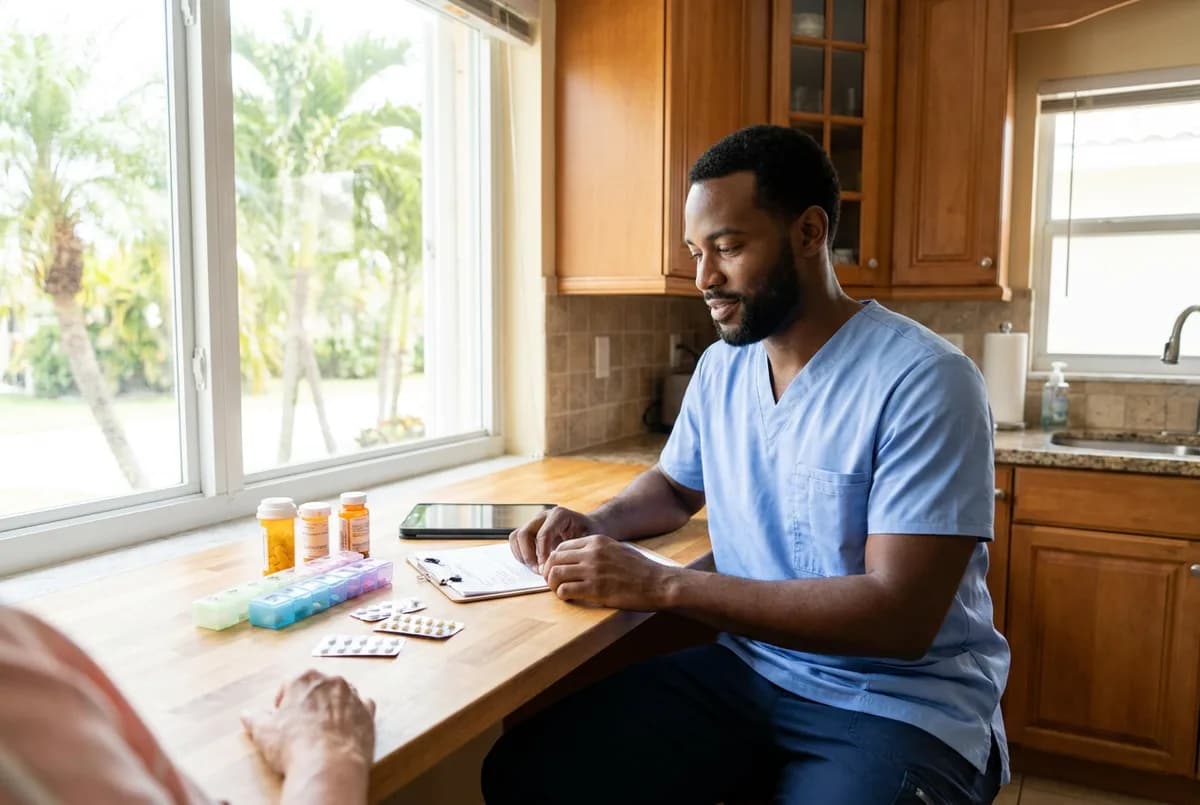
Medication Management
Organized doses, reminders, and side-effect monitoring under nurse oversight.
Learn more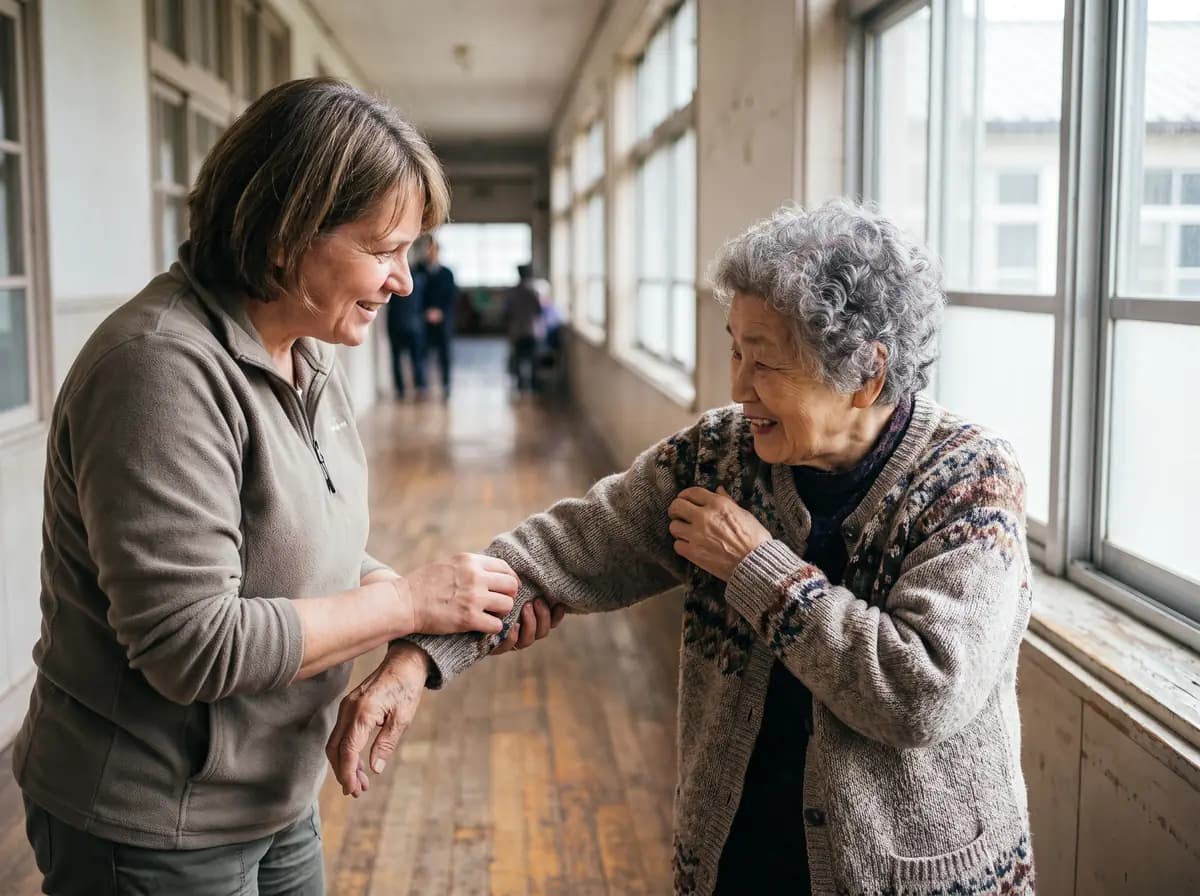
Geriatric Home Care
Age-specific care that helps seniors age safely in place.
Learn more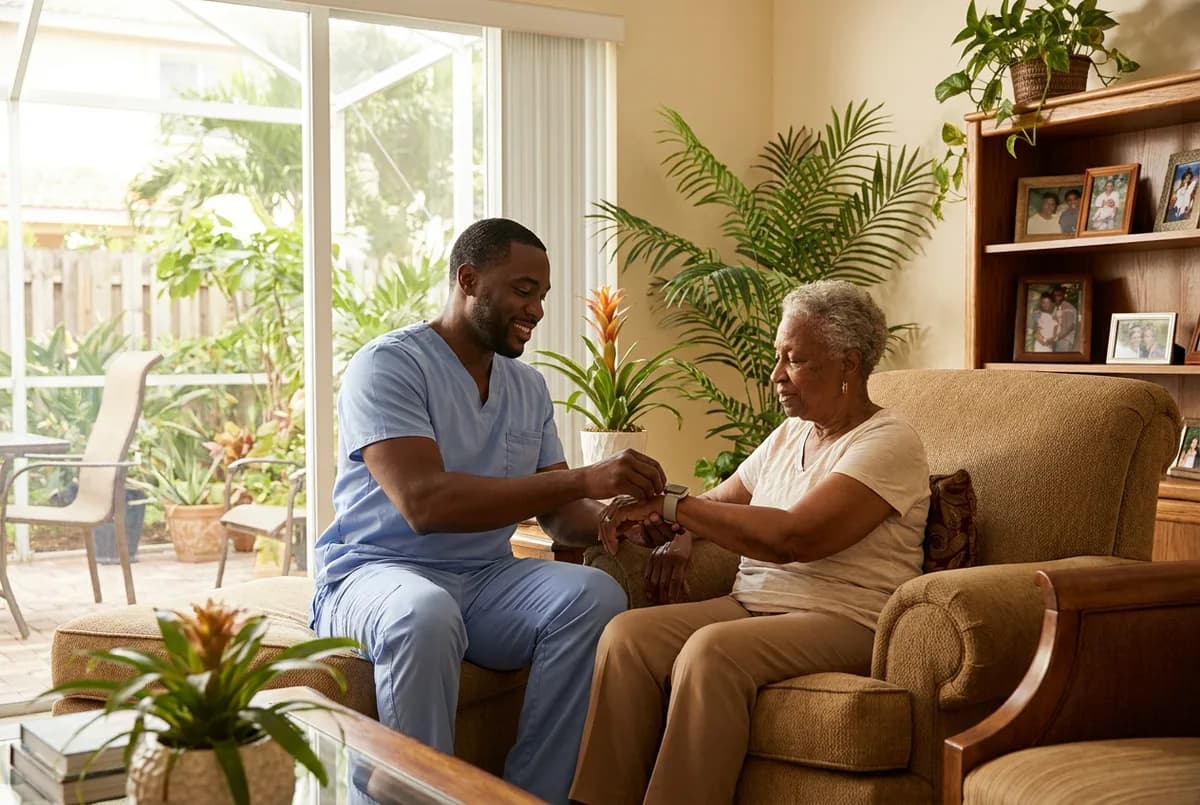
Long-Term Care at Home
Ongoing daily support at home instead of a nursing facility.
Learn more
Private Home Care
Privately arranged, one-on-one care matched to your family.
Learn more
Parkinson's Home Care
Mobility, medication timing, and fall prevention for Parkinson's.
Learn more
Disability Home Care
Daily-living support for children and adults with disabilities.
Learn more
Cerebral Palsy Home Care
Mobility, feeding, and therapy support tailored to each person.
Learn more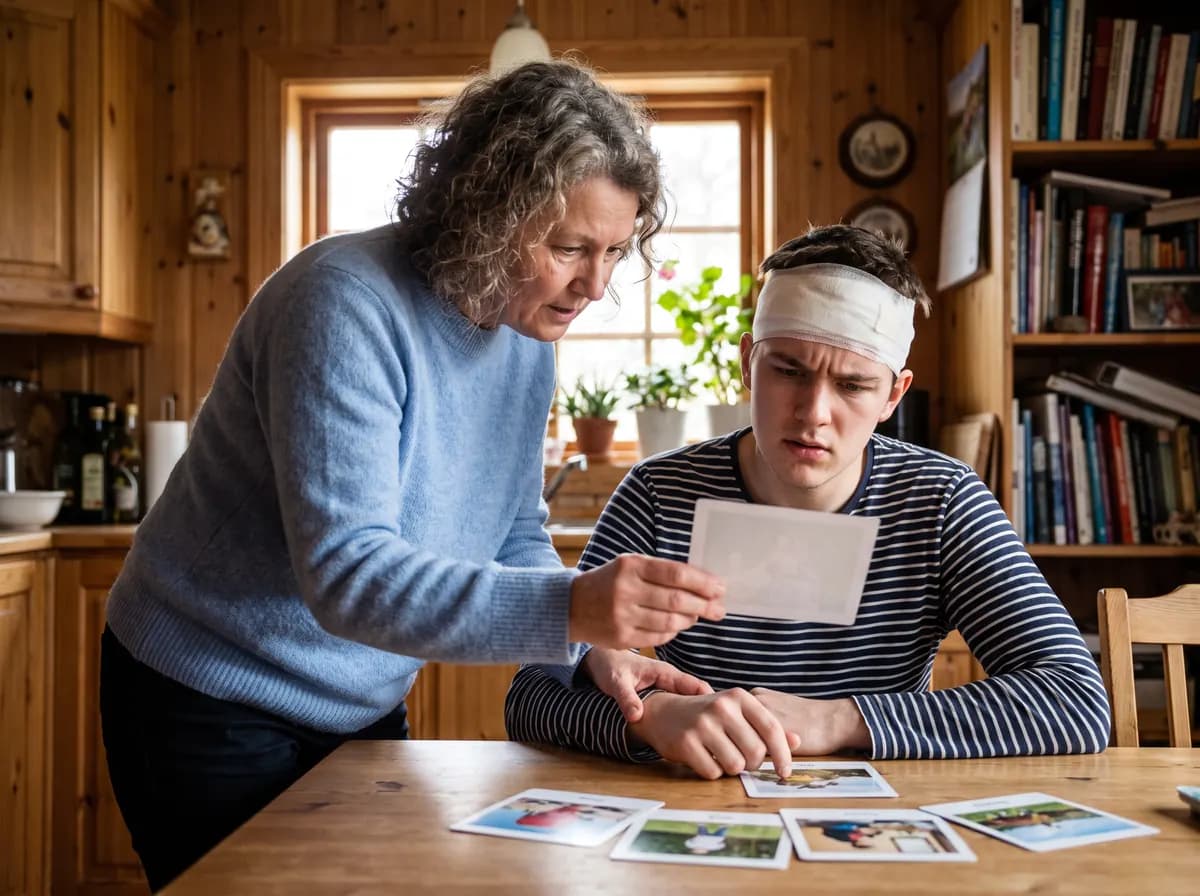
Traumatic Brain Injury Home Care
Recovery, cognition, and daily-routine support after a brain injury.
Learn more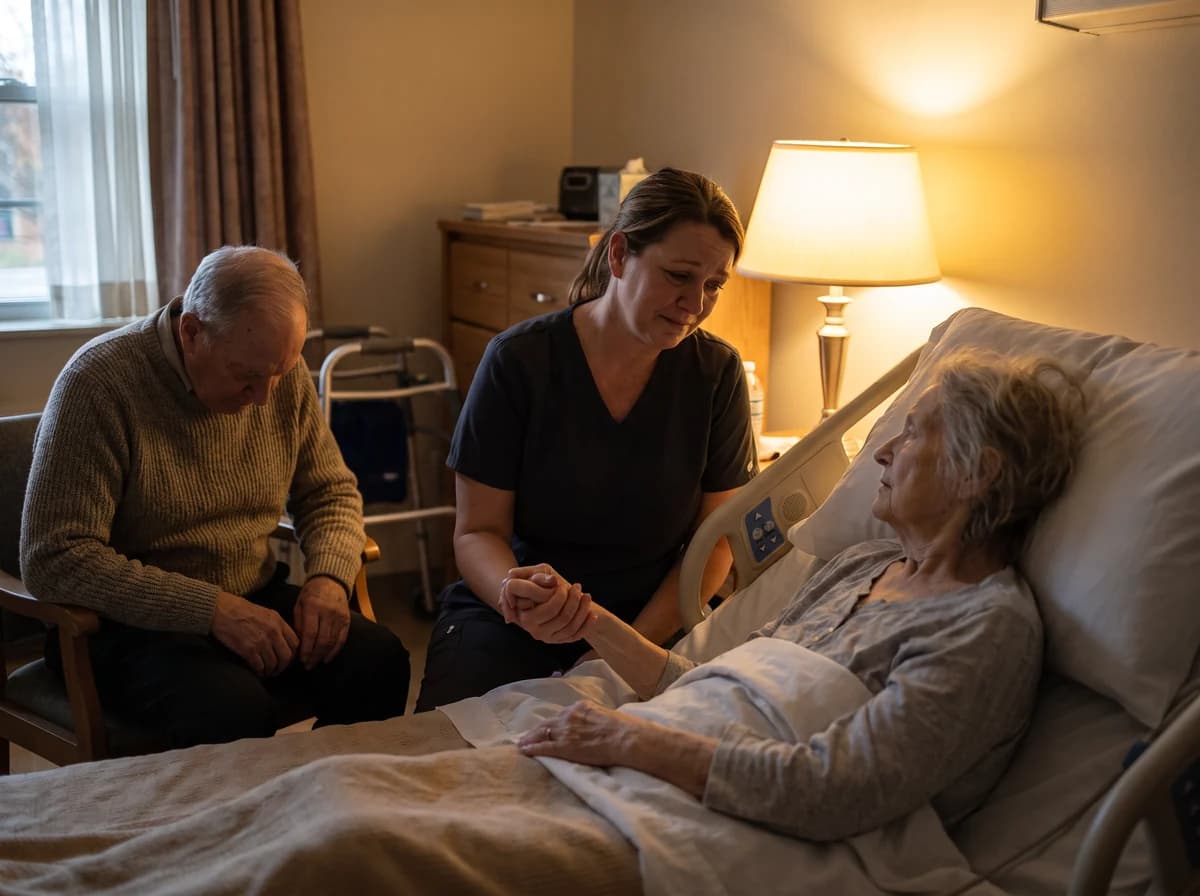
Hospice Support at Home
Comfort and hygiene support alongside a hospice team at end of life.
Learn moreWhat non-medical actually means
Non-medical home care is help with daily living rather than medical treatment. No physician's order is needed and Medicare does not fund it as an ongoing service. The names vary; the practical decisions are how many hours, at what times of day, and whether it is the same person each time.
The line is about who is legally permitted to do what.
A caregiver can help someone bathe, dress, move around the house, eat, get to an appointment and keep them company. A caregiver can remind someone to take medication. A caregiver cannot administer it, dress a wound, manage an IV or make a clinical judgment. Those require a licensed nurse and a physician's plan of care, and that is skilled home health care.
One consequence follows from that line and it catches almost everybody. Medicare does not pay for non-medical home care as an ongoing service. It funds skilled care during a physician-ordered episode and stops when the episode ends. Medicaid Long-Term Care may cover non-medical care if you qualify, long-term care insurance frequently does, and most of it is privately paid.
That is the whole significance of the medical and non-medical distinction for a family. Everything else about it is vocabulary.
The thing that matters more than the service name
Two households can buy exactly twenty hours a week and have completely different experiences, because the hours are shaped differently.
Four hours every weekday morning is not the same as ten hours on Saturday and ten on Sunday. The first covers the hardest part of every day. The second covers two days and leaves five uncovered.
So before comparing services, work out when the difficulty actually happens.
- Mornings are the heaviest part of the day for most people: Getting up, washing, dressing, breakfast and medication all land in the same two hours, and they are the tasks most likely to go undone or go badly. If you can only afford one block, this is usually where it belongs.
- Evenings matter for anyone with dementia: Confusion and agitation reliably worsen in the late afternoon and early evening. A caregiver present through that window changes the whole household's day, including the family's.
- Nights are about falls: Most falls at home happen on the way to the bathroom in the dark. If someone has already fallen once at night, overnight cover is the single most protective thing you can arrange.
- Weekends are when family caregivers break: If a spouse or adult child is doing this daily, the useful hours are the ones that give them a reliable day off, not extra help on a day they were coping anyway.
Which service, in plain terms
Grouped by how much presence you need, rather than as a list of names.
- Someone in the house for company and practical help: Companion care. Conversation, meals, errands, transportation, light housekeeping, and, the underrated part, someone who notices when things change.
- Hands-on help with the body: Personal care. Bathing, dressing, grooming, toileting, transfers. This is the service families find hardest to introduce and the one that most needs the same caregiver each time.
- A certified aide under nurse supervision: Home health aides. The same work as personal care, delivered by a certified HHA with a registered nurse overseeing the plan.
- Someone there at every hour: 24-hour home care, staffed as rotating awake shifts, or live-in care, where one caregiver lives in the home. They cost differently and suit different households.
- Cover so the family can rest: Respite care. Short-term, planned, and the most under-used service in home care.
- Care shaped around a condition: Alzheimer's and dementia care, Parkinson's care, cerebral palsy care, traumatic brain injury care, disability care. Same underlying help, organized around what the condition actually does day to day.
How much to start with
If you are not sure which of these you need, that is normal and it is what the assessment is for. Describe the day rather than naming a service, and we will tell you what fits.
Almost everyone starts with too little or too much.
Too little looks like two hours a week, which is not enough to build a relationship or cover anything reliably. Too much looks like committing to full days before anyone knows whether the caregiver is a good fit.
A sensible first arrangement for most households is three to four hours, three to five mornings a week, for a month. That is enough to cover the hard part of the day, enough for the client and caregiver to get used to each other, and small enough to change without much cost if it is not working.
Increase from there based on what actually goes wrong, not on what might.
Where non-medical stops
If the situation involves a wound that needs dressing, IV therapy, a catheter, a feeding tube, an unstable condition or anything requiring clinical judgment, that is skilled home health care and it is a different service under a physician's order.
Plenty of households need both: a nurse for the clinical hours and a caregiver for the rest of the week. That is usually cheaper than asking a nurse to do work an aide can do.
Who pays for non-medical home care
- Medicare does not fund ongoing non-medical home care: It covers aide visits only alongside skilled care during a physician-ordered episode, and it stops when that episode ends.
- Florida Medicaid Long-Term Care can, if you qualify: Screening runs through your county's Area Agency on Aging, and Florida's Medicaid regions were restructured in February 2025. See Florida Medicaid Long-Term Care.
- Long-term care insurance frequently covers it: Households routinely overlook it, and it is worth digging out before you assume anything is private pay. We will decode the terms for you at no cost.
- Private pay is the usual arrangement: We quote in writing before anything begins.
What we can tell you about scheduling
The minimum visit length is four hours. There is no minimum number of weekly hours, so you can start with a single visit a week if that is the right way in.
From your first call, the typical time to a first visit is 48 hours. Every caregiver passes a Florida Level 2 background screening, and a registered nurse writes and supervises the plan of care.
Where we provide non-medical home care
Non-medical home care across Palm Beach, Broward, Miami-Dade, Martin, St. Lucie, Indian River and Okeechobee counties.
How We Know This
Focus Family Care is a Florida-licensed home health agency and nurse registry (License NR #30211928, HHA #299995403) accredited by ACHC. Guidance on this page is reviewed by the agency's Director of Nursing, and coverage details are verified with each family's insurance before care begins.
Sources
Insurance & Payment
We Accept Medicare, Medicaid, Private Pay, and 100+ Insurance Plans
Focus Family Care accepts Medicare, Florida Medicaid, private pay, and more than 100 private insurance plans, including most long-term care policies. We verify your coverage at no charge before the first visit.





















Not sure what your plan covers? Call (561) 693-1311 for free insurance verification, no obligation.
Frequently Asked Questions
What is the difference between medical and non-medical home care?
Medical home care is treatment ordered by a physician and delivered by a licensed nurse or therapist. Non-medical home care is help with daily living, needs no order, and is not funded by Medicare as an ongoing service.
Does Medicare pay for any of this?
Not as ongoing care. Medicare covers aide visits only alongside skilled care during a physician-ordered episode, and it stops when that episode ends.
How many hours do most families start with?
Three to four hours, three to five mornings a week, is a common and sensible starting point. The minimum visit length is four hours and there is no minimum weekly commitment. Increase based on what actually proves difficult.
Can one caregiver do personal care and companion care?
Usually yes, and it is the better arrangement. Fewer people in the house means a better relationship and less to explain.
Is a home health aide different from a caregiver?
A home health aide holds a certification and works under a registered nurse's supervision. Both do non-medical work. Which one suits depends on the tasks and how much oversight the situation needs.
What if we need nursing as well?
Many households do. Focus Family Care will set out which hours need a nurse and which do not, so you are not paying nursing rates for help with a shower.
Request Home Health Care Today
Focus Family Care starts care in as little as 24 hours. Call now or request an in-home assessment. We answer around the clock.
515 N Flagler Drive, Ste 350, West Palm Beach, FL 33401