
Condition Guide
Muscular Dystrophy: Types, Symptoms, and Care
Muscular dystrophy is a group of genetic diseases that cause muscles to weaken and break down over time. Different types begin at different ages and progress at different rates, and Duchenne muscular dystrophy is the most common form in children.
Quick Answer
Muscular dystrophy is a group of inherited diseases in which muscles progressively weaken because the body cannot make the proteins that keep muscle healthy. Duchenne is the most common childhood type. As muscles weaken, care focuses on mobility, breathing, and daily support, and home care with skilled nursing helps a person stay safe at home.
Key Takeaways
- Muscular dystrophy is a group of genetic muscle-wasting diseases.
- Duchenne is the most common form in children and mostly affects boys.
- It progressively affects movement, and later breathing and heart muscle.
- Home care and skilled nursing support mobility, breathing, and daily living.
What Is Muscular Dystrophy?
Muscular dystrophy refers to more than 30 genetic conditions that cause muscle weakness and loss of muscle mass. The problem is a change in the genes that make proteins muscles need to stay strong. Without those proteins, muscle fibers are damaged and gradually replaced with scar tissue and fat.
Common Types
The types differ by the age they start, the muscles they affect, and how quickly they progress:
- Duchenne (DMD): The most common childhood form, usually noticed in early childhood, mostly in boys.
- Becker: Similar to Duchenne but milder and slower, often starting later.
- Myotonic: The most common adult-onset form, affecting muscles and other systems.
- Limb-girdle, facioscapulohumeral, and others: Affect different muscle groups and progress at different rates.
How Home Care Helps
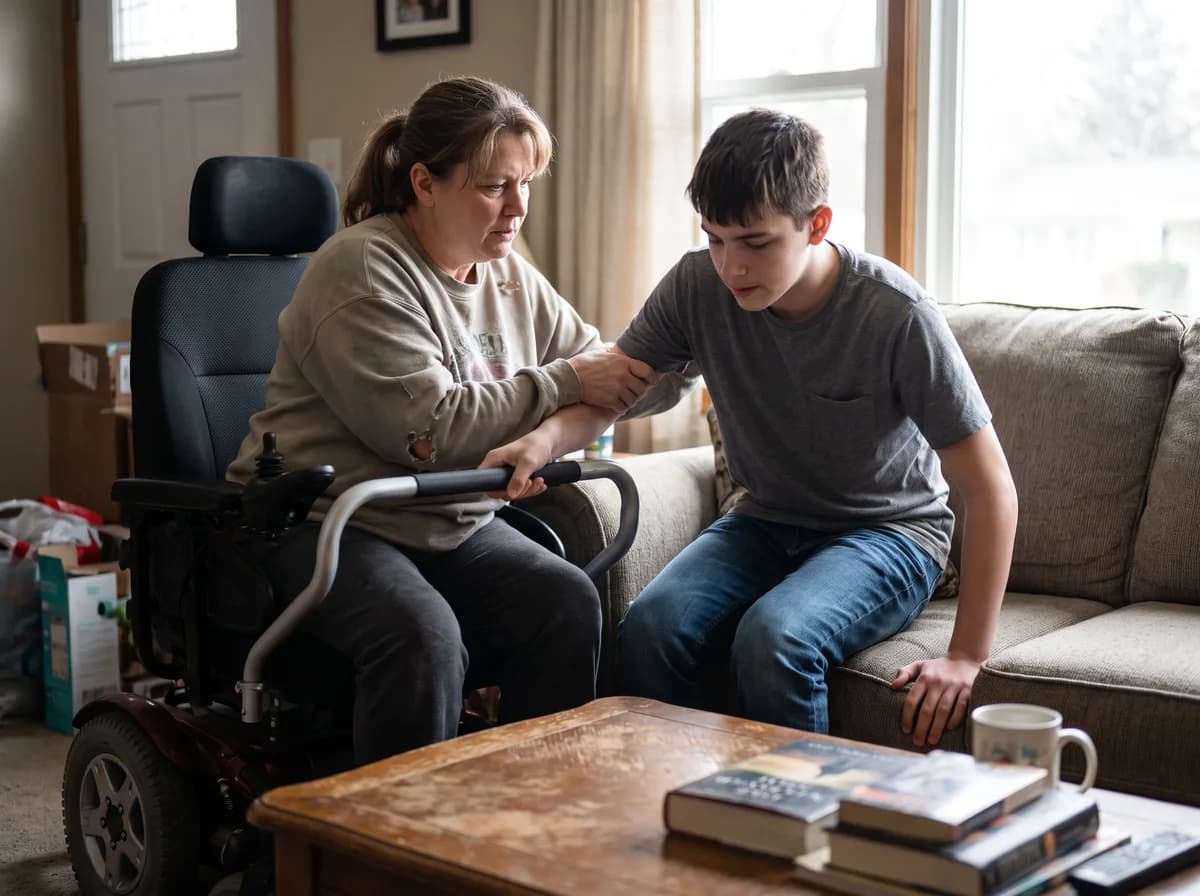
As muscular dystrophy advances, a person may need help with mobility, transfers, breathing support, and daily tasks. Focus Family Care provides pediatric home care for children and private duty nursing for complex needs, including tracheostomy or ventilator care when breathing muscles are affected. A registered nurse supervises the care plan and coordinates with the person's specialists.
How We Know This
This educational guide is reviewed by Focus Family Care's Director of Nursing, a licensed APRN. It summarizes general information from the sources below and is not a substitute for advice from your own physician. Focus Family Care is a Florida-licensed home health agency and nurse registry (NR #30211928, HHA #299995403).
Sources
Frequently Asked Questions
Is muscular dystrophy inherited?
Most types are inherited through changes in specific genes, though some occur from a new gene change. Genetic counseling helps families understand the pattern and risk.
Does muscular dystrophy affect the mind?
Muscular dystrophy mainly affects muscles. Some types have a degree of learning or cognitive effect, but many people have typical intelligence. Effects vary by type.
What kind of nursing does muscular dystrophy need?
Needs grow over time and can include help with mobility, airway clearance, and breathing support. Focus Family Care provides pediatric home care and private duty nursing for complex cases.
Request Home Health Care Today
Focus Family Care starts care in as little as 24 hours. Call now or request an in-home assessment. We answer around the clock.
515 N Flagler Drive, Ste 350, West Palm Beach, FL 33401