Condition Guide
Lennox-Gastaut Syndrome (LGS)
Lennox-Gastaut syndrome (LGS) is a severe form of childhood epilepsy that usually begins between ages 3 and 5. Children with LGS have several types of hard-to-control seizures and often need close, skilled support at home.
Quick Answer
Lennox-Gastaut syndrome is a severe childhood epilepsy marked by multiple seizure types (including drop attacks and tonic seizures), developmental delay, and a distinctive EEG pattern. Seizures are often resistant to medication, so many children need close monitoring, rescue medication, and skilled pediatric home nursing.
Key Takeaways
- LGS is a severe childhood epilepsy that usually starts between ages 3 and 5.
- Children have several seizure types, including drop attacks that cause falls.
- Seizures are often hard to control with medication.
- Many children need skilled monitoring and rescue medication at home and school.
What Is Lennox-Gastaut Syndrome?
Lennox-Gastaut syndrome is defined by three features: multiple types of seizures, a specific slow spike-and-wave pattern on EEG, and intellectual or developmental impairment. It can follow another seizure disorder (such as infantile spasms) or arise from brain injury, malformation, or genetic causes, and sometimes no cause is found.
Seizure Types and Safety
LGS involves several seizure types, and safety is a constant focus:
- Tonic seizures: Sudden body stiffening, often during sleep.
- Atonic (drop) seizures: A sudden loss of muscle tone that causes falls and injury; children often need protective helmets.
- Atypical absence seizures: Staring spells with partial loss of awareness.
- Prolonged seizures: Seizures that need rescue medication and a clear emergency plan.
How Home Care Helps a Child With LGS
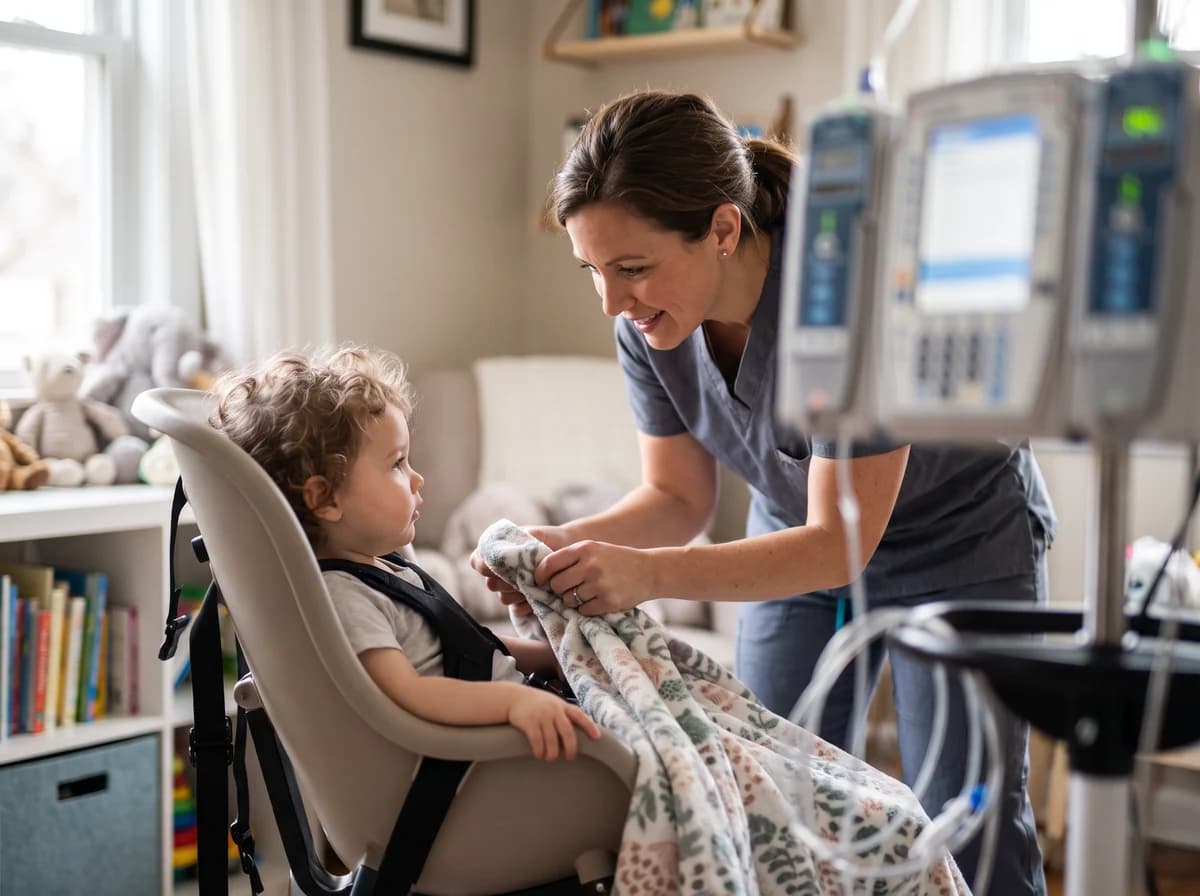
Because seizures are frequent and hard to control, many children with LGS need close supervision, rescue medication, and sometimes feeding tube support. Focus Family Care provides pediatric home care and pediatric private duty nursing, so a nurse can monitor seizures, keep the child safe from falls, and give medication at home and, when approved, at school. A registered nurse builds the plan with the child's neurologist. See our guide to epilepsy and seizures in children.
How We Know This
This educational guide is reviewed by Focus Family Care's Director of Nursing, a licensed APRN. It summarizes general information from the sources below and is not a substitute for advice from your own physician. Focus Family Care is a Florida-licensed home health agency and nurse registry (NR #30211928, HHA #299995403).
Sources
Frequently Asked Questions
What is the difference between epilepsy and Lennox-Gastaut syndrome?
LGS is a specific, severe epilepsy syndrome with multiple seizure types, a characteristic EEG, and developmental impairment, while epilepsy is the broader term for having recurrent seizures. A neurologist confirms LGS.
Do children with LGS need a nurse at home?
Many do. Frequent, hard-to-control seizures and the need for rescue medication and fall protection mean many children with LGS benefit from skilled pediatric home nursing. Focus Family Care provides this care.
Why do children with LGS wear helmets?
Drop (atonic) seizures cause a sudden loss of muscle tone and falls, which can injure the head. Protective helmets reduce that risk during everyday activity.
Request Home Health Care Today
Focus Family Care starts care in as little as 24 hours. Call now or request an in-home assessment. We answer around the clock.
515 N Flagler Drive, Ste 350, West Palm Beach, FL 33401