Condition Guide
Congestive Heart Failure: Signs, Stages, and Home Care
Congestive heart failure (CHF) means the heart cannot pump blood as well as it should, so fluid backs up in the lungs, legs, and body. CHF is manageable, and careful monitoring at home is one of the best ways to stay out of the hospital.
Quick Answer
Congestive heart failure is a chronic condition in which a weakened heart cannot pump enough blood, causing fluid to build up and leading to shortness of breath, swelling, and fatigue. It is managed with medication, a low-sodium diet, daily weight and symptom monitoring, and skilled nursing at home to catch warning signs early and prevent hospital readmission.
Key Takeaways
- CHF means the heart cannot pump well, so fluid backs up in the lungs and body.
- Warning signs include shortness of breath, swelling, weight gain, and fatigue.
- Daily weight and symptom monitoring catches flare-ups early.
- In-home skilled nursing helps manage CHF and prevent hospital readmission.
What Is Congestive Heart Failure?
In congestive heart failure, a weakened or stiff heart cannot keep up with the body's needs, so blood and fluid back up. This causes congestion in the lungs (shortness of breath) and swelling (edema) in the legs, ankles, and abdomen. CHF is usually a long-term condition caused by coronary artery disease, high blood pressure, prior heart attack, or valve problems, and it is managed rather than cured.
Warning Signs and the Stages of CHF
Doctors describe CHF in stages, from Stage A (at risk, no symptoms) through Stage D (advanced symptoms needing specialized care), and by how much daily activity is limited. The warning signs to watch for at home are increasing shortness of breath, swelling in the legs or belly, sudden weight gain (a sign of fluid), a persistent cough, fatigue, and trouble lying flat. Catching these early can prevent a hospital stay.
How Home Care Helps Manage CHF
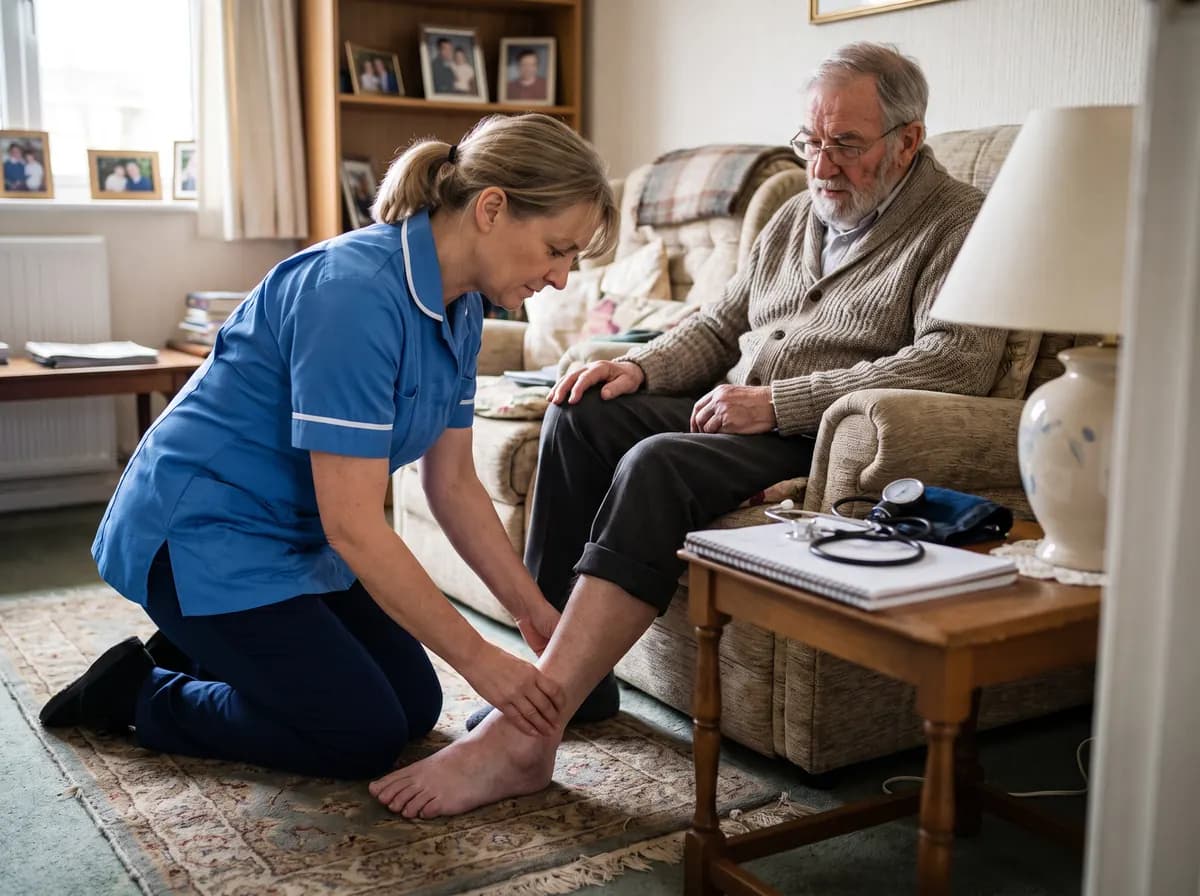
Focus Family Care provides in-home skilled nursing for people living with CHF: nurses check weight, blood pressure, and swelling, review medications, teach a low-sodium diet, and watch for early signs of a flare-up. Home health aides help with daily tasks so the person conserves energy, and transitional care after a hospital stay lowers the risk of readmission. A registered nurse coordinates with the person's cardiologist. For older adults, this pairs with geriatric home care.
How We Know This
This educational guide is reviewed by Focus Family Care's Director of Nursing, a licensed APRN. It summarizes general information from the sources below and is not a substitute for advice from your own physician. Focus Family Care is a Florida-licensed home health agency and nurse registry (NR #30211928, HHA #299995403).
Sources
Frequently Asked Questions
What are the first warning signs of congestive heart failure?
Early signs include shortness of breath (especially lying down or with activity), swelling in the legs or ankles, sudden weight gain from fluid, fatigue, and a persistent cough. Report these to a doctor promptly.
How does home care help with congestive heart failure?
In-home skilled nurses monitor weight, blood pressure, and swelling, manage medications, teach a low-sodium diet, and catch flare-ups early, which helps prevent emergency visits and hospital readmissions. Focus Family Care provides this care.
Can you live a long time with congestive heart failure?
Many people live for years with CHF when it is well managed with medication, diet, monitoring, and support. Careful daily monitoring at home is one of the most important parts of managing it.
Request Home Health Care Today
Focus Family Care starts care in as little as 24 hours. Call now or request an in-home assessment. We answer around the clock.
515 N Flagler Drive, Ste 350, West Palm Beach, FL 33401