
Care Guide
Home Care After Surgery
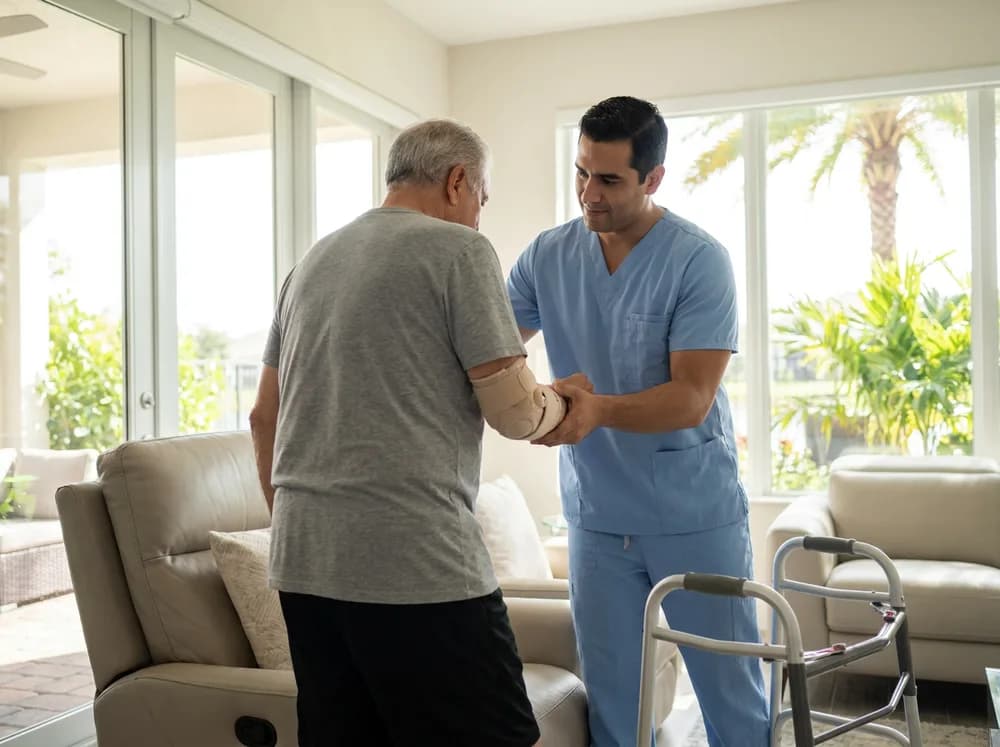
The days and weeks after surgery are when complications and hospital readmissions are most likely. Home care after surgery gives you trained help with recovery, from wound care and medication to mobility and daily tasks, so you can heal safely at home instead of returning to the hospital.
Quick Answer
Home care after surgery provides in-home help during recovery, including wound care, medication management, help with bathing and mobility, meal preparation, and monitoring for complications. It is often called transitional care because it bridges the move from hospital to home and helps prevent readmission.
Key Takeaways
- The first weeks after surgery carry the highest risk of complications and readmission.
- Home care covers wound care, medication, mobility, and daily tasks during recovery.
- Transitional care coordinates the hospital-to-home handoff to prevent readmission.
- A registered nurse supervises the plan and watches for warning signs.
What Home Care After Surgery Includes
After surgery, post-surgical care at home typically includes help with wound and incision care, managing pain and other medications, getting safely in and out of bed, bathing and dressing, meal preparation, and transportation to follow-up appointments. When skilled nursing is needed, a registered nurse provides skilled nursing visits and watches for signs of infection or complications.
Why the Hospital-to-Home Transition Matters
Most readmissions happen because something goes wrong in the first weeks at home: a missed medication, an unnoticed infection, or a fall. Transitional care is designed to prevent that. It coordinates the handoff from the hospital, makes sure medications and instructions are followed, and keeps a trained caregiver present during the riskiest part of recovery.
How Long Do You Need Home Care After Surgery?
It depends on the procedure. A minor outpatient surgery might need only a few days of help, while major surgery, joint replacement, or cardiac surgery can call for several weeks. Focus Family Care can provide care hourly, overnight, or around the clock, and adjusts as you recover.
Arranging Recovery Care in South Florida
Focus Family Care coordinates recovery care with hospitals across South Florida and can begin care within 24 hours. Care can be paid through Medicare, Florida Medicaid, long-term care insurance, VA benefits, or private pay, and Focus Family Care verifies coverage for free before care begins.
How We Know This
Focus Family Care is a Florida-licensed home health agency and nurse registry (License NR #30211928, HHA #299995403) accredited by ACHC. Guidance on this page is reviewed by the agency's Director of Nursing, and coverage details are verified with each family's insurance before care begins.
Sources
Frequently Asked Questions
What is home care after surgery called?
It is often called post-surgical care or transitional care. Transitional care specifically refers to coordinating the move from hospital to home to prevent readmission. Focus Family Care provides both.
Does Medicare cover home care after surgery?
Medicare may cover skilled home health services after surgery for a homebound patient who needs skilled care. Non-medical recovery help can be paid through Medicaid, long-term care insurance, VA benefits, or private pay. Focus Family Care verifies coverage for free.
How soon after surgery can care start?
Focus Family Care can begin home care within 24 hours in many cases, including on the day of discharge, so help is in place the moment you get home.
Can I get 24-hour care after surgery?
Yes. Focus Family Care offers hourly, overnight, and 24-hour care after surgery, and adjusts the amount of care as you recover.
Request Home Health Care Today
Focus Family Care starts care in as little as 24 hours. Call now or request an in-home assessment. We answer around the clock.
515 N Flagler Drive, Ste 350, West Palm Beach, FL 33401