Condition Guide
Feeding Tubes: Types, Care, and Home Support
A feeding tube delivers nutrition directly to the stomach or intestine when a person cannot eat safely by mouth. This guide explains what a feeding tube is, the common types, the daily care it needs, warning signs to watch for, and how skilled home nursing helps.
Quick Answer
A feeding tube (enteral feeding) delivers nutrition, fluids, and medicine directly to the stomach or small intestine when a person cannot eat enough safely by mouth. Common types include the nasogastric (NG) tube, the gastrostomy tube (G-tube or PEG), and the jejunostomy (J-tube). Daily care includes flushing the tube, caring for the skin around the site, and giving feedings safely, often with skilled home nursing.
Key Takeaways
- A feeding tube delivers nutrition, fluids, and medicine when eating by mouth is not safe.
- Common types are the NG tube, G-tube (PEG), and J-tube.
- Daily care includes flushing, site care, and safe feeding.
- Skilled home nursing manages feeding tubes for adults and children and trains families.
What Is a Feeding Tube?
A feeding tube provides enteral nutrition, meaning nutrition delivered to the digestive tract, for people who cannot eat or drink enough by mouth to stay healthy. It may be needed after a stroke, with swallowing problems, with certain neurological or complex medical conditions, or for medically fragile children. A feeding tube can be temporary or long-term.
Types of Feeding Tubes
The most common feeding tubes are:
- Nasogastric (NG) tube: A tube passed through the nose to the stomach, usually for short-term use.
- Gastrostomy (G-tube or PEG): A tube placed through the abdominal wall directly into the stomach for longer-term feeding.
- Jejunostomy (J-tube): A tube placed into the small intestine, used when the stomach must be bypassed.
- Gastrojejunostomy (GJ-tube): A combined tube that can access both the stomach and the small intestine.
Daily Feeding-Tube Care and Warning Signs
Feeding-tube care includes flushing the tube to keep it clear, cleaning and checking the skin around the site, giving feedings and medications correctly, and positioning the person safely during and after feeding. Warning signs that need attention include a clogged tube, leaking, redness or drainage at the site, a tube that comes out, vomiting, or signs of aspiration. A nurse teaches families the safe technique.
Home Care for Feeding Tubes
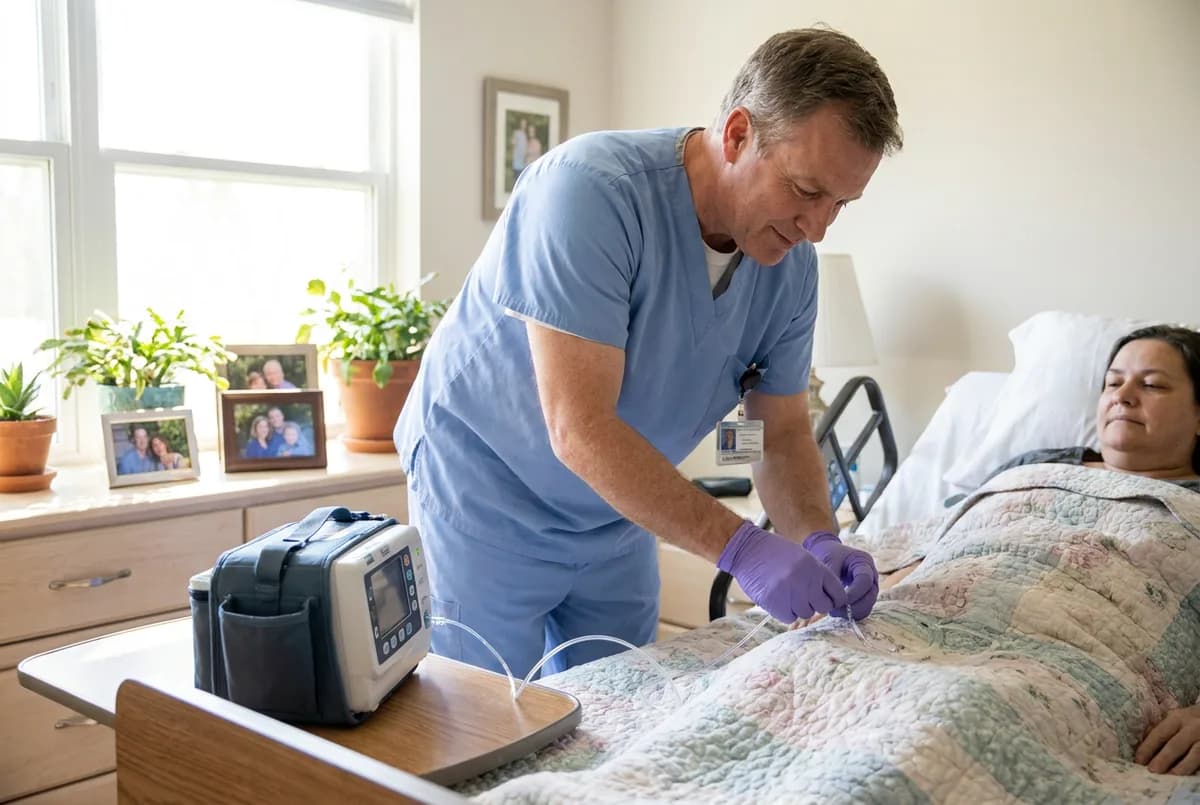
Many people with a feeding tube are cared for safely at home with skilled nursing support. Focus Family Care provides tube feeding (G-tube) care for adults and children, including feeding-pump setup, site care, and family training. For medically complex children, it coordinates with pediatric home care and private duty nursing.
How We Know This
This educational guide is reviewed by Focus Family Care's Director of Nursing, a licensed APRN. It summarizes general information from the sources below and is not a substitute for advice from your own physician. Focus Family Care is a Florida-licensed home health agency and nurse registry (NR #30211928, HHA #299995403).
Sources
Frequently Asked Questions
What is a feeding tube?
A feeding tube delivers nutrition, fluids, and medicine directly to the stomach or small intestine when a person cannot eat enough safely by mouth. It can be temporary or long-term.
What are the types of feeding tubes?
Common types are the nasogastric (NG) tube through the nose, the gastrostomy (G-tube or PEG) through the abdomen into the stomach, the jejunostomy (J-tube) into the small intestine, and the combined GJ-tube.
How do you care for a feeding tube at home?
Feeding-tube care includes flushing the tube, cleaning and checking the skin around the site, giving feedings and medications correctly, and safe positioning. A nurse trains families and manages complex needs.
Can feeding-tube care be done at home?
Yes. With skilled nursing support and family training, feeding-tube care is routinely done at home. Focus Family Care provides G-tube and enteral feeding care for adults and children across South Florida.
Request Home Health Care Today
Focus Family Care starts care in as little as 24 hours. Call now or request an in-home assessment. We answer around the clock.
515 N Flagler Drive, Ste 350, West Palm Beach, FL 33401