Condition Guide
Tracheostomy Care: What It Is, Risks, and Home Support
A tracheostomy is a surgically created opening in the neck into the windpipe that helps a person breathe. This guide explains what a tracheostomy is, why it is needed, the daily care it requires, and how skilled home nursing supports patients and families.
Quick Answer
A tracheostomy (or 'trach') is a surgical opening through the front of the neck into the trachea (windpipe), with a tube that helps a person breathe when the normal airway is blocked or when long-term ventilator support is needed. Tracheostomy care includes suctioning, cleaning the tube and stoma, and humidifying the air, and it is often supported by skilled home nursing.
Key Takeaways
- A tracheostomy is a surgical airway through the neck into the windpipe.
- It is used for airway blockage, long-term ventilator support, or clearing secretions.
- Daily care includes suctioning, cleaning, humidification, and tube changes.
- Skilled home nursing can manage trach and ventilator care safely at home for adults and children.
What Is a Tracheostomy?
A tracheostomy is an opening created by surgery through the front of the neck and into the trachea, or windpipe. A small tube (the tracheostomy tube) is placed in the opening so a person can breathe through it. A tracheostomy may be needed when the upper airway is blocked, when a person needs a ventilator for a long time, or when it is hard to clear mucus and secretions from the lungs.
Daily Tracheostomy Care
A tracheostomy needs regular care to keep the airway open and prevent infection. Daily care usually includes:
- Suctioning: Removing mucus from the tube and airway so the person can breathe clearly.
- Cleaning: Cleaning or changing the inner cannula and caring for the skin around the stoma.
- Humidification: Adding moisture to the air, because the tube bypasses the nose that normally warms and humidifies it.
- Tube changes: Changing the tracheostomy tube on the schedule set by the physician.
Risks and Warning Signs
A tracheostomy carries risks that families and caregivers watch for, including a blocked tube, infection, accidental removal of the tube, and bleeding. Warning signs that need immediate attention include trouble breathing, a whistling sound, thick or discolored mucus, fever, or redness and drainage at the stoma. Trained caregivers know how to respond quickly to keep the airway safe.
Home Care for Tracheostomy Patients
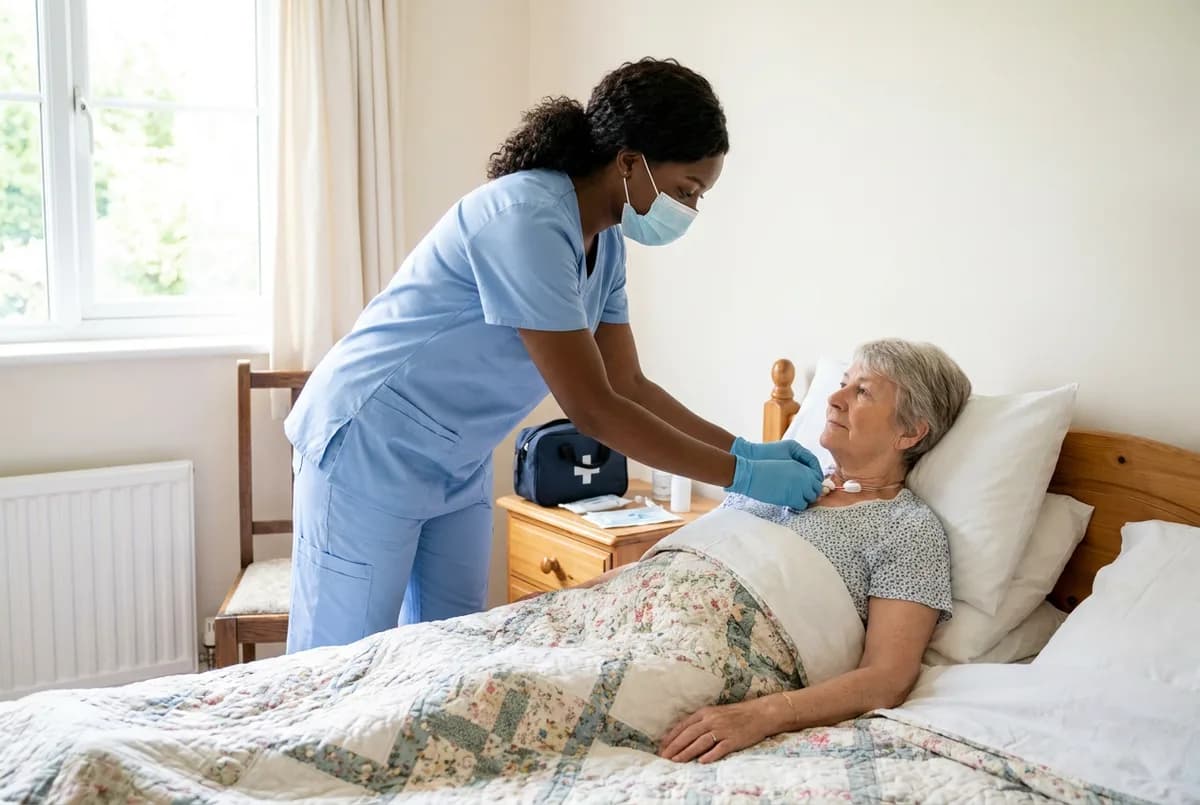
Many people with a tracheostomy are cared for safely at home with skilled nursing support. Focus Family Care provides tracheostomy and ventilator care for adults and children, including suctioning, airway management, and family training. For medically complex children, it coordinates trach care with pediatric home care and private duty nursing.
How We Know This
This educational guide is reviewed by Focus Family Care's Director of Nursing, a licensed APRN. It summarizes general information from the sources below and is not a substitute for advice from your own physician. Focus Family Care is a Florida-licensed home health agency and nurse registry (NR #30211928, HHA #299995403).
Sources
Frequently Asked Questions
What is a tracheostomy for?
A tracheostomy helps a person breathe when the upper airway is blocked, when they need long-term ventilator support, or when it is hard to clear secretions from the lungs. A tube placed in the opening keeps the airway open.
Can you talk with a tracheostomy?
Many people can speak with a tracheostomy using a speaking valve or by covering the tube, depending on their situation. A speech therapist and the medical team help determine what is safe.
Can tracheostomy care be done at home?
Yes. With skilled nursing support and family training, tracheostomy care is routinely done at home. Focus Family Care provides trach and ventilator nursing for adults and children across South Florida.
How is a tracheostomy cleaned?
Tracheostomy care includes suctioning mucus, cleaning or changing the inner cannula, caring for the skin around the stoma, and humidifying the air. A nurse teaches families the correct technique.
Request Home Health Care Today
Focus Family Care starts care in as little as 24 hours. Call now or request an in-home assessment. We answer around the clock.
515 N Flagler Drive, Ste 350, West Palm Beach, FL 33401