
Condition Guide
The Stages of Dementia: Early, Middle, and Late
Dementia usually progresses through recognizable stages, from mild memory changes to needing full-time care. This guide explains the early, middle, and late stages of dementia, their symptoms, and when in-home care helps.
Quick Answer
Dementia is commonly described in three stages, early (mild), middle (moderate), and late (severe), and sometimes on a seven-stage scale. The early stage brings mild memory loss; the middle stage brings more confusion and difficulty with daily tasks; the late stage requires help with almost all care. In-home care can support a loved one safely at home through each stage.
Key Takeaways
- Dementia is often described in three stages: early, middle, and late.
- The early stage brings mild memory loss; the middle stage brings confusion and difficulty with daily tasks.
- The late stage requires help with nearly all daily care and often around-the-clock support.
- In-home dementia care can keep a loved one safe at home through each stage.
How Dementia Progresses
Dementia is a general term for a decline in memory and thinking serious enough to affect daily life, with Alzheimer's disease being the most common cause. It usually gets worse over time. Doctors often describe it in three stages, early, middle, and late, and sometimes use a more detailed seven-stage scale. Every person is different, and stages can overlap.
Early Stage (Mild)
In the early stage, a person can often still live independently. Signs include forgetting recent conversations or names, misplacing items, trouble finding the right word, and difficulty with planning or organizing. Families may first notice subtle changes at this stage, which is a good time to plan for support.
Middle Stage (Moderate)
The middle stage is usually the longest and can last for years. Confusion grows, and the person needs more help with daily tasks such as dressing, bathing, and managing medications. Wandering, changes in sleep, and behavior or mood changes are common, and safety at home becomes a bigger concern.
Late Stage (Severe)
In the late stage, a person needs full-time help with almost all daily care. Communication becomes very limited, mobility declines, and the person may lose the ability to walk, sit up, or swallow safely. Around-the-clock, compassionate care focused on comfort and dignity is the priority.
When to Get In-Home Dementia Care
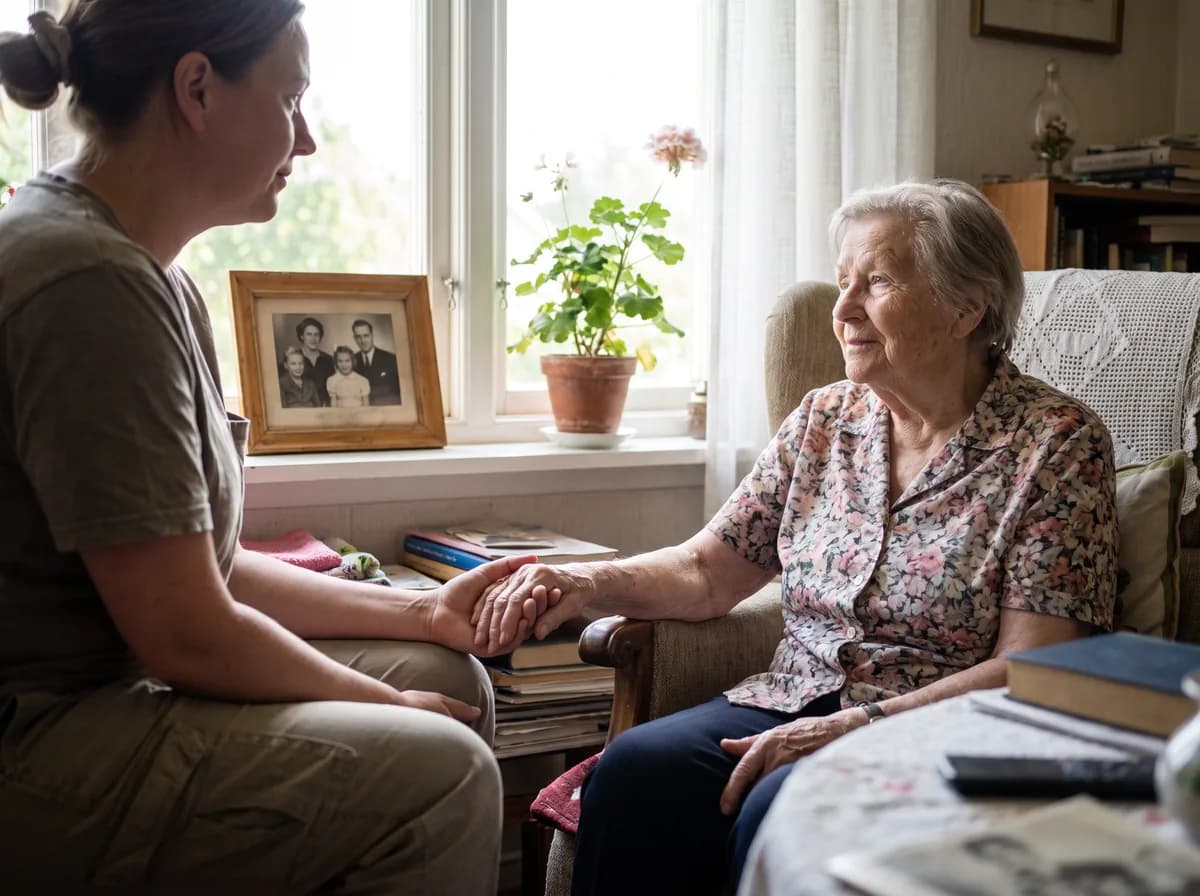
Families often bring in help when safety, wandering, or caregiver exhaustion become concerns. Focus Family Care provides in-home Alzheimer's and dementia care with trained caregivers, and can add 24-hour home care as needs increase, so a loved one can stay in familiar surroundings at every stage.
How We Know This
This educational guide is reviewed by Focus Family Care's Director of Nursing, a licensed APRN. It summarizes general information from the sources below and is not a substitute for advice from your own physician. Focus Family Care is a Florida-licensed home health agency and nurse registry (NR #30211928, HHA #299995403).
Sources
Frequently Asked Questions
What are the stages of dementia?
Dementia is commonly described in three stages: early (mild), middle (moderate), and late (severe). Some clinicians use a seven-stage scale for more detail. Symptoms worsen from mild memory loss to needing full-time care.
How long does each stage of dementia last?
It varies by person and cause. The early stage may last a couple of years, the middle stage is often the longest and can last several years, and the late stage varies. A physician can give guidance for a specific person.
What stage of dementia needs 24-hour care?
Many families add around-the-clock care in the middle to late stages, when wandering, safety, or full-time care needs make it hard for one caregiver to manage alone.
How does home care help with dementia?
In-home dementia care provides trained caregivers who help with memory support, wandering safety, daily routines, personal care, and companionship, so a loved one can stay safely at home through each stage.
Request Home Health Care Today
Focus Family Care starts care in as little as 24 hours. Call now or request an in-home assessment. We answer around the clock.
515 N Flagler Drive, Ste 350, West Palm Beach, FL 33401