
Condition Guide
Traumatic Brain Injury: Effects, Recovery, and Care at Home
A traumatic brain injury (TBI) happens when a sudden blow or jolt to the head disrupts normal brain function. This guide explains what a TBI is, the levels of severity, the physical and cognitive effects, the recovery process, and how home care supports recovery.
Quick Answer
A traumatic brain injury (TBI) is damage to the brain caused by a sudden blow, bump, or jolt to the head, from a fall, crash, or other impact. TBIs range from mild (concussion) to severe, and can affect movement, thinking, memory, mood, and behavior. Home care supports recovery with skilled nursing, therapy coordination, safety, and help with daily living.
Key Takeaways
- A TBI is brain damage from a sudden blow or jolt to the head.
- Severity ranges from mild (concussion) to moderate to severe.
- Effects can be physical, cognitive, emotional, and behavioral.
- Home care supports recovery, safety, and daily living during rehabilitation.
What Is a Traumatic Brain Injury?
A traumatic brain injury occurs when an external force, such as a fall, a car crash, a sports impact, or an assault, disrupts normal brain function. Falls are the leading cause, especially among older adults and young children. A TBI can be closed (no break in the skull) or penetrating, and its effects depend on the severity and the area of the brain affected.
Levels of TBI Severity
TBIs are generally classified as mild, moderate, or severe. A mild TBI, often called a concussion, may cause a brief change in consciousness, headache, confusion, or memory problems. A moderate or severe TBI can cause a longer loss of consciousness, lasting cognitive and physical effects, and a much longer recovery. Even a mild TBI should be evaluated by a medical professional.
Common Effects of a TBI
A TBI can affect many areas, and effects vary by person:
- Physical: Headaches, fatigue, dizziness, balance problems, and weakness.
- Cognitive: Trouble with memory, attention, concentration, and problem-solving.
- Emotional and behavioral: Mood swings, irritability, anxiety, or depression.
- Sleep and sensory: Changes in sleep, and sensitivity to light or sound.
Recovery and Home Care for TBI
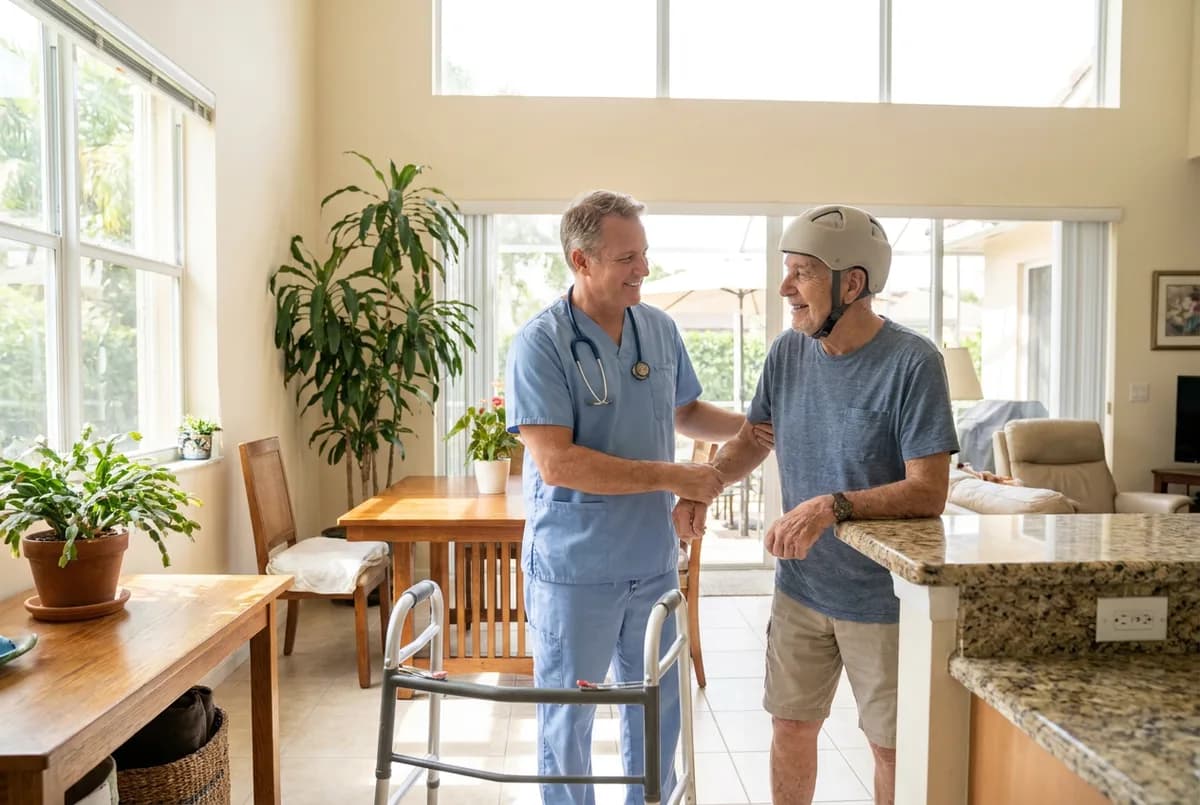
Recovery from a moderate or severe TBI can take months or years, and rehabilitation is central to regaining skills. Home care supports recovery with skilled nursing, help with daily activities, fall prevention, cognitive-activity support, and coordination with the rehab team. Focus Family Care provides traumatic brain injury care across South Florida, and adds physical therapy at home and skilled nursing as needed.
How We Know This
This educational guide is reviewed by Focus Family Care's Director of Nursing, a licensed APRN. It summarizes general information from the sources below and is not a substitute for advice from your own physician. Focus Family Care is a Florida-licensed home health agency and nurse registry (NR #30211928, HHA #299995403).
Sources
Frequently Asked Questions
What is a traumatic brain injury?
A traumatic brain injury (TBI) is damage to the brain caused by a sudden blow, bump, or jolt to the head, such as from a fall, crash, or impact. It ranges from mild (concussion) to severe.
What are the effects of a TBI?
A TBI can cause physical effects (headaches, fatigue, balance problems), cognitive effects (memory and attention problems), and emotional or behavioral changes. Effects vary by severity and the area of the brain affected.
How long does TBI recovery take?
Recovery varies widely. A mild TBI may resolve in weeks, while a moderate or severe TBI can take months or years and often needs ongoing rehabilitation and support.
How does home care help after a TBI?
Home care supports TBI recovery with skilled nursing, help with daily activities, fall prevention, cognitive-activity support, and coordination with the rehab team, so recovery continues safely at home.
Request Home Health Care Today
Focus Family Care starts care in as little as 24 hours. Call now or request an in-home assessment. We answer around the clock.
515 N Flagler Drive, Ste 350, West Palm Beach, FL 33401