
Condition Guide
Quadriplegia: Causes, Levels, and Living at Home
Quadriplegia, also called tetraplegia, is paralysis affecting both arms and both legs, usually from a spinal cord injury. This guide explains the causes, injury levels, and common complications, and how home care helps a person with quadriplegia live at home.
Quick Answer
Quadriplegia (tetraplegia) is paralysis of both arms and both legs, usually caused by an injury to the cervical (neck) region of the spinal cord. The higher on the spinal cord the injury is, and the more complete it is, the greater the loss of movement and sensation. Home care supports breathing, skin, bowel and bladder, mobility, and daily living.
Key Takeaways
- Quadriplegia (tetraplegia) is paralysis of both arms and both legs.
- It usually results from a cervical (neck) spinal cord injury.
- Injuries are described by level (C1 to C8) and as complete or incomplete.
- Home care manages breathing, skin, bowel and bladder, and daily living so a person can live at home.
What Is Quadriplegia?
Quadriplegia, now often called tetraplegia, is paralysis that affects both arms and both legs, and usually the trunk. It results from damage to the cervical part of the spinal cord, in the neck. Paraplegia, by contrast, affects the legs and lower body from injuries lower on the spinal cord. Quadriplegia can also affect breathing, bladder and bowel function, and sensation.
Causes and Injury Levels
Most quadriplegia is caused by a spinal cord injury from a car accident, a fall, a sports injury, or an act of violence, though it can also result from medical conditions. Injuries are described by the level of the spinal cord affected, from C1 near the top of the neck to C8 at the base. A higher injury generally means more loss of function. Injuries are also classified as complete (no movement or sensation below the injury) or incomplete (some function remains).
Common Complications of Quadriplegia
People with quadriplegia face a higher risk of certain complications that caregivers work to prevent, including breathing problems, pressure injuries (bedsores), urinary tract infections, bowel and bladder issues, blood clots, muscle spasticity, and autonomic dysreflexia, a dangerous rise in blood pressure that needs urgent attention.
Home Care for Quadriplegia
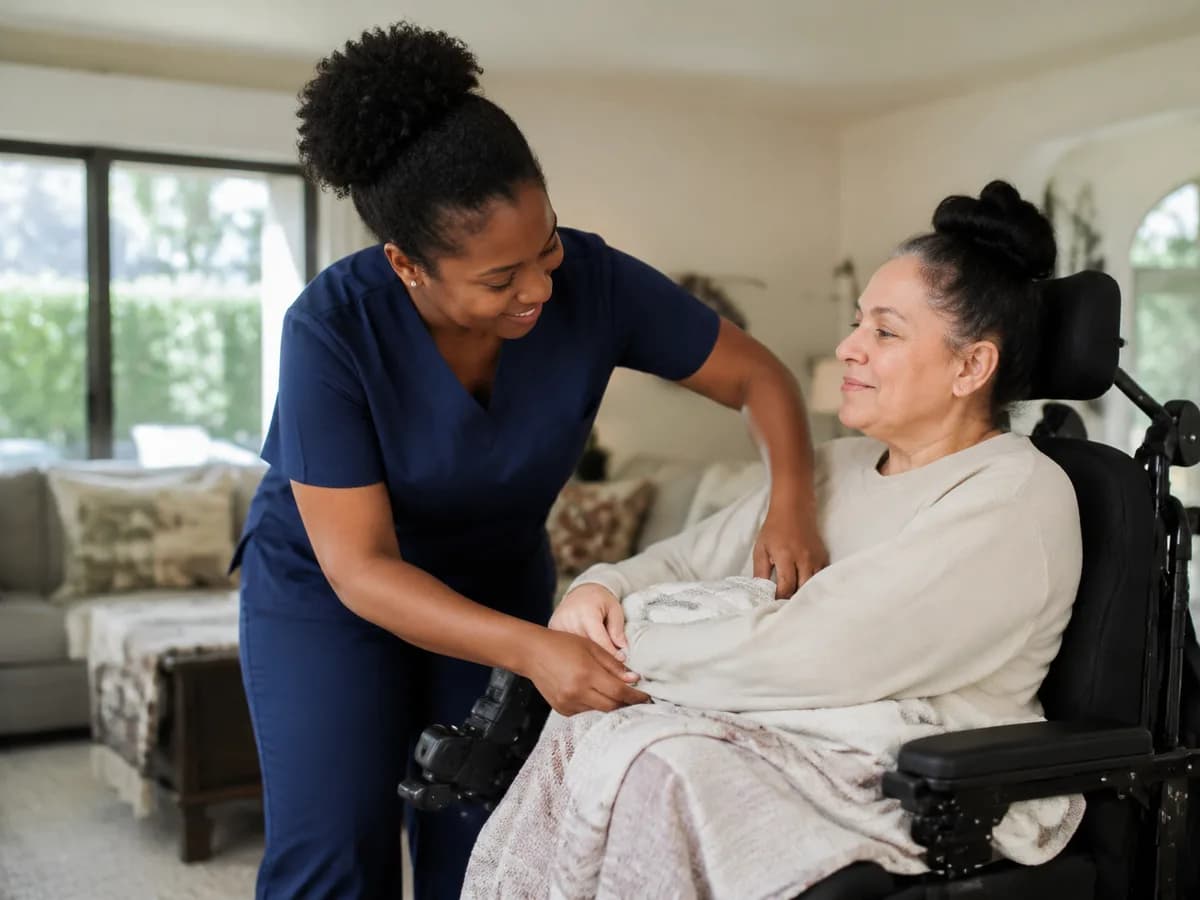
Most people with quadriplegia can live safely at home with the right support. Focus Family Care provides quadriplegic home care that manages breathing and, when needed, tracheostomy and ventilator care, prevents pressure injuries, handles bowel and bladder programs, and helps with transfers and daily living. Continuous, one-on-one care is available through private duty nursing.
How We Know This
This educational guide is reviewed by Focus Family Care's Director of Nursing, a licensed APRN. It summarizes general information from the sources below and is not a substitute for advice from your own physician. Focus Family Care is a Florida-licensed home health agency and nurse registry (NR #30211928, HHA #299995403).
Sources
Frequently Asked Questions
What causes quadriplegia?
Quadriplegia is most often caused by a cervical (neck) spinal cord injury from a car accident, fall, sports injury, or violence, and can also result from certain medical conditions.
What is the difference between quadriplegia and paraplegia?
Quadriplegia (tetraplegia) affects both arms and both legs from an injury in the neck, while paraplegia affects the legs and lower body from an injury lower on the spinal cord.
Can a person with quadriplegia live at home?
Yes. Most people with quadriplegia can live safely at home with skilled nursing, respiratory support, and personal care. Focus Family Care provides quadriplegic home care across South Florida.
What kind of care does a person with quadriplegia need?
Care includes breathing support, skin and pressure-injury prevention, bowel and bladder management, transfers and positioning, and help with daily living such as bathing, dressing, and feeding.
Request Home Health Care Today
Focus Family Care starts care in as little as 24 hours. Call now or request an in-home assessment. We answer around the clock.
515 N Flagler Drive, Ste 350, West Palm Beach, FL 33401