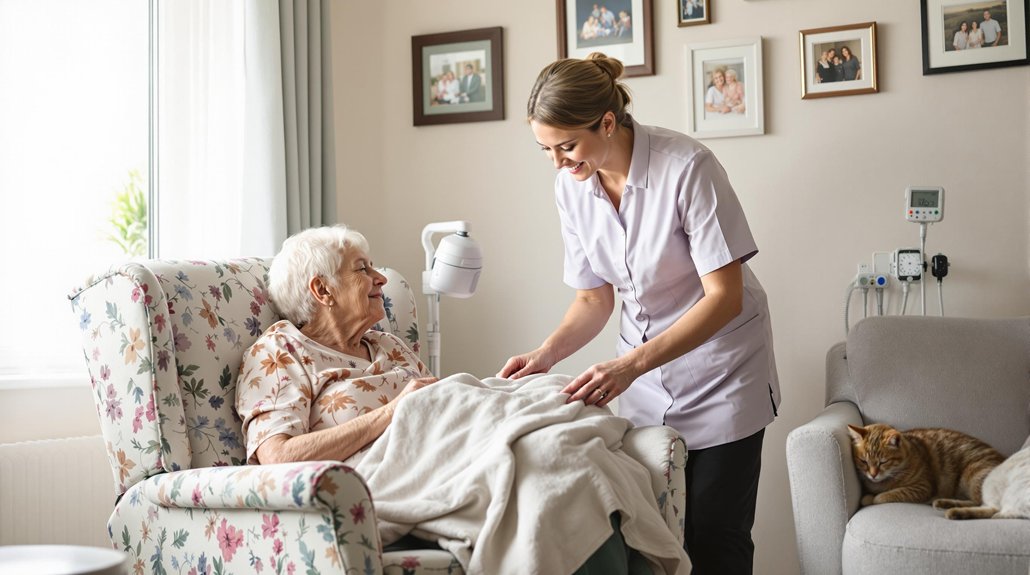

You’ll find the highest-paying home health aide positions in coastal states like Alaska, Massachusetts, and California, where wages can reach $45,000 annually. Major metropolitan areas including San Francisco, Seattle, and New York City offer premium rates up to $22 per hour, plus benefits. Government facilities and specialized private agencies typically provide better compensation. To maximize your earning potential, consider relocating to these high-paying regions and pursuing advanced certifications. The path to higher wages extends well beyond location alone.
Top-Paying States for Home Health Aides
While home health aide salaries vary considerably across the United States, several states consistently offer higher wages than the national average.
You’ll find the highest paying states concentrated in the Northeast and West Coast regions, where cost of living and healthcare demands typically drive up wages.
When making salary comparisons, Alaska, Massachusetts, California, Washington, and New York regularly rank among the top states for home health aide compensation.
In these locations, you can expect to earn considerably more than in other parts of the country. This higher pay often reflects the greater expense of living in these areas, but it also acknowledges the essential role you’ll play in supporting vulnerable populations.
If you’re willing to relocate, targeting these states could greatly increase your earning potential in this rewarding career.
Quality assurance measures and thorough training programs ensure that home health aides maintain high standards of care while earning competitive wages.
Metropolitan Areas With Premium Wages
The five highest-paying metropolitan areas for home health aides include San Francisco, Seattle, New York City, Boston, and Los Angeles. These urban centers offer notably higher wages due to their higher costs of living and increased demand for in-home care services.
Major urban hubs like San Francisco and New York lead the nation in home health aide wages, driven by living costs and care demands.
You’ll find that wage disparities between major metropolitan areas and smaller cities can be substantial, with top-paying cities offering $5-8 more per hour than the national average.
In San Francisco, you can earn up to $22 per hour, while Seattle offers around $20 per hour. New York City, Boston, and Los Angeles average between $17-19 per hour.
If you’re willing to work in these competitive markets, you’ll benefit from both higher wages and greater job opportunities.
Many of these cities also offer additional perks like extensive benefits packages and career advancement programs.
Skilled nursing care and specialized training requirements in these metropolitan areas contribute to the higher compensation rates for qualified home health professionals.
Employment Settings That Offer Higher Salaries
Different employment settings can considerably impact your earnings as a home health aide. You’ll find that choosing where you work plays an essential role in maximizing your income potential while serving others in need.
Private agencies often offer competitive wages and benefits packages that exceed industry averages, especially if you’re willing to work with specialized patient populations.
- Government-funded healthcare facilities typically provide higher base pay rates and extensive benefits compared to nonprofit organizations.
- Private agencies focusing on high-end clientele or specialized care services frequently offer premium compensation packages.
- Hospital-affiliated home health programs generally feature structured pay scales with opportunities for advancement and regular raises.
Working directly with private clients through reputable agencies can also lead to better earning potential, particularly if you develop expertise in specific areas of care or obtain additional certifications.
Nursing home staffing opportunities through healthcare staffing agencies often provide competitive compensation due to the high demand for skilled caregivers in long-term care settings.
Factors Driving Regional Pay Differences
Regional salary variations among home health aides stem from several key economic and demographic factors that shape local market conditions.
If you’re seeking higher pay, you’ll find that metropolitan areas typically offer better wages due to their higher cost of living and concentrated healthcare facilities.
Areas with aging populations create stronger workforce demand, pushing wages upward as agencies compete for qualified aides.
Growing senior populations naturally boost wages for home health workers as care providers vie for available talent.
You’ll notice that states with robust healthcare systems and higher minimum wage laws tend to compensate home health workers more generously.
Additionally, regions with active labor unions often secure better pay and benefits for their members.
The presence of specialized care facilities and affluent communities can also drive up local wages, as these settings require more skilled care and can afford to pay premium rates.
Organizations like Florida Community Care prioritize comprehensive training and quality standards for their caregivers, which often translates to higher compensation levels.
Career Advancement Opportunities and Pay Growth
While location impacts your initial salary, advancing your career as a home health aide opens paths to higher earnings. Through dedication to professional development and gaining specialized skills, you’ll position yourself for career progression opportunities that can greatly enhance your income.
- Pursue certifications in specialized care areas like dementia, hospice, or rehabilitation to command higher pay rates and expand your service capabilities.
- Develop your leadership skills to shift into supervisory roles, where you’ll manage other aides while earning an increased salary.
- Master salary negotiation techniques by documenting your achievements, maintaining detailed records of additional responsibilities, and researching market rates for your experience level.
Consider joining professional organizations and networking with other healthcare professionals to stay informed about advancement opportunities in your region.
Focus Family Care offers flexible schedules and competitive compensation while prioritizing ongoing training for career advancement.
Certification Requirements and Salary Impact
Certification requirements directly influence a home health aide’s earning potential and career mobility. You’ll find that obtaining relevant certifications can greatly boost your salary negotiation power and open doors to specialized care roles.
| Certification Level | Salary Impact | Career Benefits |
|---|---|---|
| Basic HHA | Base pay rate | Entry-level positions |
| Advanced HHA | +$2-4/hour | Specialized care roles |
| Specialized Certs | +$5-7/hour | Leadership positions |
The certification benefits extend beyond just higher pay. When you’re certified in specialized areas like dementia care or hospice support, you’ll qualify for positions in higher-paying settings such as private care facilities or hospitals. Many employers also offer certification reimbursement programs, making it easier for you to advance your career while maintaining your current position.
Conclusion
Home health aides earn the best pay in Alaska, California, and Washington state, where caring professionals can make over $35,000 each year. In Alaska’s cities, these dedicated caregivers earn nearly 40% more than elsewhere in the country – that’s like getting an extra day’s pay for every three days worked! You can boost your earnings by getting special training certificates, working directly with private families, or moving to cities where the pay is higher. Just like a garden that grows stronger each season, this field is growing fast and is expected to expand by 25% through 2031.
The best part? You won’t walk this path alone. Every day, thousands of compassionate people just like you choose to make a difference in others’ lives through home health care. Whether you’re helping an elderly grandmother enjoy her morning tea or assisting a recovering patient with daily tasks, you’re creating moments of comfort and connection that truly matter.
Ready to take the next step in your caregiving journey? Focus Family Care is here to support you every step of the way. If you or a loved one need help, don’t wait. Reach out to Focus Family Care today at (561) 693-1311 or email us at info@focusfamilycare.com.