The Rule of Nines is a rapid assessment tool you’ll find occupational therapists using to evaluate burn injuries. It divides the body into sections that each represent about 9% of total body surface area – including the head/neck, arms, chest, abdomen, and legs, with 1% for the groin. You’ll see this method guide treatment decisions and help monitor healing progress. There’s much more to discover about how this essential assessment shapes rehabilitation planning and recovery.
Understanding the Rule of Nines Assessment Method
The Rule of Nines serves as a critical evaluation tool in occupational therapy for evaluating burn injuries and determining the total body surface area (TBSA) affected. This method divides the body into sections, each representing approximately 9% of the total surface area, making quick injury evaluation possible during emergency situations.
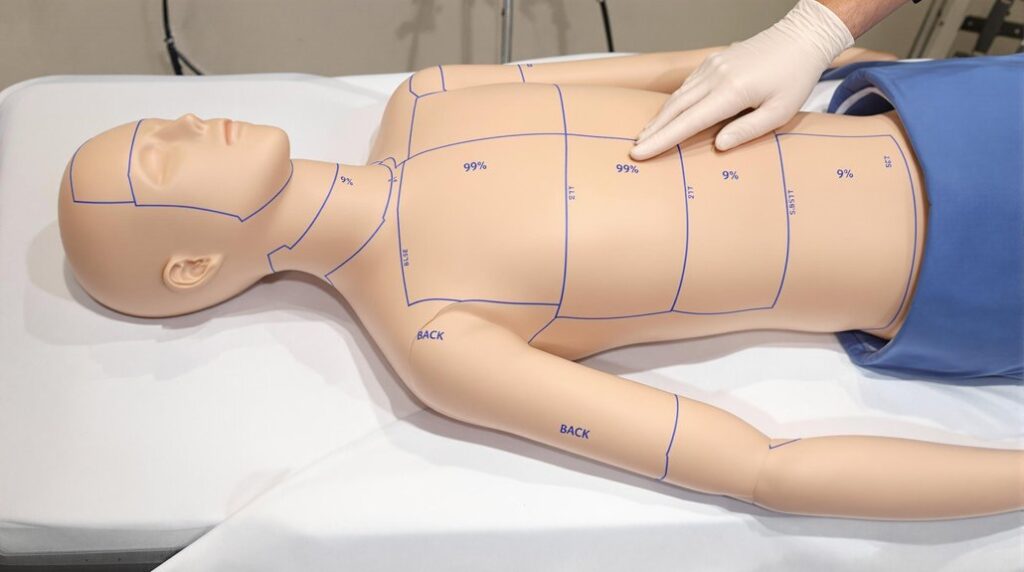
You’ll find that the body’s sections are divided as follows: head and neck (9%), each arm (9%), chest front (9%), chest back (9%), abdomen front (9%), abdomen back (9%), each leg front (9%), each leg back (9%), and groin (1%).
When you’re evaluating burns, you’ll need to calculate these percentages to determine the severity and extent of injuries. The method’s evaluation accuracy depends on your ability to identify affected areas clearly and calculate the total percentage correctly. Physical therapy services are often integrated into the recovery plan to help restore mobility and function after severe burns.
Historical Development and Medical Origins
Originally developed during World War II by military physicians, the Rule of Nines emerged as a rapid assessment method for treating burn victims on the battlefield. You’ll find this system’s historical context rooted in the urgent need for quick, accurate burn assessments during combat situations. Similar to post-surgical recovery care, the system focuses on comprehensive assessment and monitoring to prevent complications and promote healing.
| Time Period | Medical Evolution |
|---|---|
| 1940s | Military battlefield creation |
| 1950s | Civilian hospital adoption |
| 1960s | Pediatric modifications |
| 1970s | Global standardization |
| Present | Digital integration |
Through the decades, medical professionals have refined this method to serve diverse populations. What started as a wartime solution has evolved into a standard practice across healthcare settings. You’ll now use this system in occupational therapy to assess burns, plan interventions, and track patient progress with remarkable accuracy and efficiency.
Body Surface Area Calculations and Percentages
Building on its military origins, modern Rule of Nines calculations provide a systematic method for measuring total body surface area (TBSA) affected by burns. The system divides the adult body into sections of roughly 9% each: head and neck (9%), each arm (9%), chest anterior (9%), chest posterior (9%), abdomen anterior (9%), abdomen posterior (9%), each leg anterior (9%), each leg posterior (9%), and groin (1%).
You’ll find this area measurement technique particularly useful when conducting quick assessments in emergency situations.
For pediatric patients, you’ll need to adjust these percentages since children’s heads comprise a larger proportion of their body surface. The child’s head typically accounts for 18% of TBSA, with other body segments adjusted proportionally smaller to compensate for this difference.
Physical therapy at home can help patients recover from burns through customized rehabilitation plans that address mobility and pain management needs.
Clinical Applications in Occupational Therapy
Occupational therapists apply the Rule of Nines in three key clinical scenarios: burn assessment, wound care planning, and progress monitoring.
When you’re evaluating burns, you’ll use this method to quickly determine the total body surface area affected, which helps guide your therapeutic interventions and informs the medical team’s treatment decisions.
During wound care planning, you’ll use the Rule of Nines to document affected areas and develop targeted treatment strategies. This includes deciding on appropriate dressing types and positioning techniques. You’ll also incorporate patient education about protecting the affected areas during daily activities.
For progress monitoring, you’ll track healing percentages over time, helping you adjust treatment plans and set realistic recovery goals. This systematic approach guarantees you’re providing evidence-based care while maintaining accurate documentation of your patient’s improvement.
Recovery timelines should be adjusted based on individual factors, with most patients requiring 4 to 6 weeks for complete healing and rehabilitation.
Benefits and Limitations of the Assessment Tool
While the Rule of Nines serves as a valuable assessment method in occupational therapy practice, it’s important to understand both its strengths and drawbacks.
You’ll find that this assessment tool offers quick, reliable measurements without requiring complex equipment, making it ideal for initial evaluations and emergency situations.
The advantages include its standardized approach, ease of documentation, and ability to track progress over time. You can efficiently communicate findings with other healthcare professionals using this universally recognized method.
Standardized assessment methods streamline documentation and progress tracking, facilitating clear communication across the healthcare team.
However, the tool’s drawbacks include potential inaccuracies with certain body types, particularly in pediatric or obese patients.
You’ll need to take into account that it’s less precise for smaller affected areas and may oversimplify complex burn patterns. Understanding these limitations helps you determine when to supplement with other assessment methods.
Similar to skilled nursing care, the tool requires professional expertise to ensure accurate assessment and monitoring of patient conditions.
Implementation Strategies for Treatment Planning
Three key steps form the foundation of implementing the Rule of Nines in treatment planning.
First, you’ll need to conduct a thorough initial assessment, documenting the affected body areas and their corresponding percentages.
Next, you’ll establish treatment goals by collaborating with your client to prioritize the most severely impacted regions and determine functional outcomes they hope to achieve.
Finally, you’ll develop a targeted intervention plan that addresses both the physical and occupational needs identified through the assessment.
Remember that client involvement is essential throughout this process – their input helps guarantee the treatment plan aligns with their daily activities and personal goals.
You can adjust the plan as needed based on regular reassessments and your client’s progress, maintaining flexibility while working toward ideal outcomes.
Conclusion
The Rule of Nines is like a helpful map of the body that guides healthcare workers in measuring burn injuries. Think of it as dividing the body into simple sections – just like slicing a pie into equal pieces. This gentle but effective tool helps your care team understand how much care you need and track your healing journey. While no measuring system is perfect, the Rule of Nines gives us a clear, caring way to watch over your recovery and make sure you get the right treatment at the right time.
You’re not alone in this journey. Whether you’re recovering from burns or supporting a loved one who is, having compassionate, knowledgeable care makes all the difference. Focus Family Care understands your needs and is here to support you every step of the way.
If you or a loved one need help, don’t wait. Reach out to Focus Family Care today at (561) 693-1311 or email us at info@focusfamilycare.com.