

Treatment of a child with autism is a long process that requires patience, understanding, and an environment that supports the growth of the child. Many families find that the best support is at home, where children feel free and safe. The needs of autistic children in in-home care are based on the formation of a secure and organized environment where children can be helped to learn to communicate, be emotionally stable, and independent in an environment that is familiar to them.
Home-based care is beneficial because it incorporates developmental support into everyday life, enabling children to learn through routines, interactions, and family participation. This guide discusses real-life strategies, the advantages of in-home care for autistic child, and ways families can develop a helpful care plan that promotes long-term growth.
What In-Home Care for an Autistic Child Really Means
Home-based autism care aims to establish everyday activities to support advances in communication, socialisation, and behaviour. Learning in a familiar setting means the children will be less nervous and more willing to participate in activities. Families can also regulate light, sound, and daily routines to establish an environment that suits their child’s sensory needs.
Benefits of In-Home Care for Autistic Children
Knowledge of the benefits of in-home care for autistic children allows the families to make the correct choices regarding the form of support that their child requires. Home-based care is personalized and focuses on the child’s specific strengths and challenges.
Some of the key advantages of home-based care include:
- Personalized attention tailored to the child’s needs
- Learning opportunities during daily routines
- Reduced anxiety from unfamiliar environments
- Greater involvement of parents in the development process
Home care also serves to build relationships within the family. As parents become more interested in their child’s development, they gain better insight into behavioral antecedents and speech patterns. This information can enhance daily communication and simplify the caregiving process.
How to Provide In-Home Care for Autistic Children at Home
One of the most significant aspects of home-based care is an established daily routine. Children with autism are usually at ease when they know what to expect. Regular meal times, playtime, learning, and sleep can help reduce anxiety and make it easier for children to switch tasks.
Practical strategies that support home-based care include:
- Using visual schedules to show daily activities
- Keeping meal and sleep routines consistent
- Creating quiet areas for relaxation and focus
- Encouraging communication during daily interactions
These minor adjustments enable children to build self-esteem and self-reliance and strengthen their capacity to deal with daily circumstances.
How Parents Can Support an Autistic Child in Daily Life.
Learning and development are possible in daily activities. Parents can help an infant by making activities meaningful and instilling confidence and life skills. For example, communication and social interaction may be learned during mealtimes. Creativity and cooperation can be encouraged with playtime; relaxation, regulation, and emotional control can be taught with bedtime routines.
Parents can support their child’s progress by:
- Encouraging communication during meals or play
- Practicing patience and calm responses during challenges
- Preparing children in advance for transitions between activities
- Reinforcing positive behavior with praise or rewards
Consistency is essential. When children are provided with the same kind of approach in their daily routine, they will eventually learn to control their emotions and become better equipped to know what is expected of them.
Self-Care Skills That Matter Most for Autistic Children
Learning self-care is one step toward becoming independent. Parents can also assist children in developing confidence and independence, though these skills might not be acquired immediately; with practice, they can be achieved.
Important self-care skills that parents can focus on include:
- Personal hygiene routines like brushing teeth and washing hands
- Learning to dress independently
- Cleaning up toys or belongings after activities
- Developing simple organizational habits
As the children grow up learning these skills, they develop confidence and feel more at ease handling the daily duties.
Why Many Families Struggle With Autism Care at Home
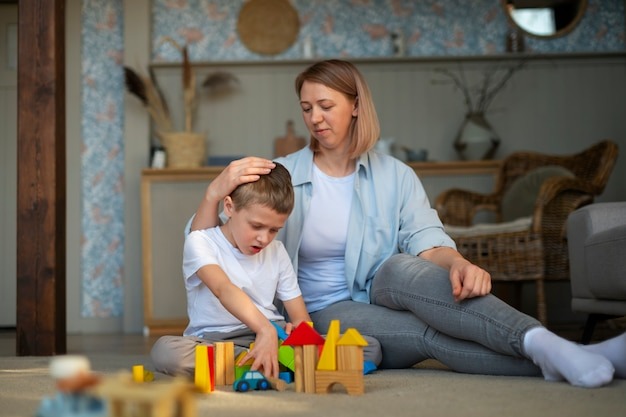
Home care of a child with autism may be a gratifying experience, yet it may also be difficult. A lot of families are overwhelmed trying to address behavioral needs, communication problems, and daily obligations.
Common challenges families face include:
- Managing behavioral or sensory triggers
- Balancing work and caregiving responsibilities
- Understanding communication barriers
- Finding reliable professional guidance
Acknowledging these obstacles is a significant step toward locating the appropriate support system. The families are reminded that the desire to get help is a step in the right direction towards better care and well-being.
The Role of Professional Caregivers for Autistic Children
In cases where professional caregivers for autistic children are involved, families gain extra support for autistic children. Such caregivers receive appropriate training to understand the needs of people with autism and to provide structured support at home.
Professional caregivers can be used to support therapy plans and strategies, as well as the development of communication and routines. Their experience enables the family to provide a consistent learning environment and reduce the burden of handling complex scenarios on their own.
Some ways caregivers support families include:
- Assisting with daily routines and activities
- Reinforcing behavioral and communication strategies
- Supporting social interaction and play
- Providing guidance to parents on developmental support
Having trained caregivers may form a balanced intervention in which the family and the child will each receive the support they require.
How to Choose the Right Home Care Support for Autism
The selection of a caregiver is a critical step that may affect the child’s development and overall health. The family needs to closely assess the experience, training, and capacity of a caregiver to relate to the child.
Factors to consider when selecting home care support include:
- Experience working with children on the autism spectrum
- Training in behavioral or developmental support
- Patience, empathy, and strong communication skills
- Ability to collaborate with parents and therapists
The careful choice procedure is useful in ensuring that the caregiver can offer emotional and systematic guidance.
Do Autistic Children Need Lifelong Care
Autism is a spectrum, i.e., there are no universal abilities and support requirements in all children. Some people might need constant support, while others can gain a lot of autonomy with age.
Early intervention and regular support are essential to enabling the child to develop life skills. Children can become more self-reliant in the long run when they are taught communication, socialization, and self-care skills at an early age.
Parents would be best advised to support progress rather than be concerned with long-term labeling. Every child is unique, and most autistic people lead successful, independent lives.
Creating a Safe, Supportive, and Sustainable Home Care Plan
Developing a working home care plan takes time, perseverance, and cooperation. The family members are to concentrate on creating routines that facilitate communication, emotional regulation, and independence.
A combination of parenting and professional advice can result in the most positive outcomes. Parents know their child’s personality and preferences, and trained caregivers can offer guided developmental assistance.
A successful home care plan may include:
- Consistent routines that create predictability
- Gradual development of life skills and independence
- Collaboration between parents, caregivers, and therapists
- Regular evaluation of the child’s progress and needs
Conclusion: Helping Autistic Children Thrive with the Right In-Home Care Support
In-home care for an autistic child would make the child feel secure, supported, and encouraged to develop. With proper plans and guidance, families can help children acquire the skills and confidence they need in life.
Focus Family Care is here to assist you if you need a kind, trustworthy caregiver. Our skilled team understands the specific needs of autistic children and provides tailored in-home care to support their well-being.
Contact Focus Family Care today to learn how our dedicated caregivers can support your child’s development and provide peace of mind for your family.
FAQ’s
1. What does in-home care for autistic children involve?
Home-based care of autistic children entails systematic assistance in the comfort of homes that enable autistic children to grow up with communication, behavioral, social, and everyday living skills.
2. How can parents provide effective in-home care for autistic children?
Efficient in-home care could be achieved by the parents through consistent routines, promoting communication, providing visual support, and establishing a serene environment that facilitates learning and emotional stability.
3. What are the benefits of in-home care for autistic children compared to outside therapy?
Home-based care is one that helps autistic children to acquire skills in a familiar environment without creating anxiety, but provides personalized instruction and increased participation of family members.
4. When should families consider professional caregivers for autistic children?
Families might want to consider hiring professional caregivers when children require specialized developmental care, routines, or other support to address behavioral or communication problems.
5. How can in-home care help autistic children become more independent?
According to in-home care, autistic children develop independence by teaching them self-care routines, communication skills, and daily life habits through consistent practice in their daily environment.